Wednesday, January 26, 2022

Wednesday Morning Links

Miscellaneous material for your mid-week reading.

- Emma Farge and Mrinalika Roy report on the World Health Organization's warning that it's dangerous to act like the COVID pandemic is over. Davide Mastracci observes that governments who have been willing to bother protecting citizens against substantial community spread have been successful even against the Omicron variant - meaning that the illness and death sweeping over countries with less responsible governments are a matter of choice. Vincent McDermott reports on the Alberta Workers' Compensation Board's recognition of thousands of cases in the province's workplaces, while Zak Vescera reveals that Scott Moe and his government have blocked any enforcement of the vaccine mandate which was supposed to reduce the risk of transmission in Saskatchewan's health care system. And Sarath Peiris argues that we should be expecting Saskatchewan Party MLAs to speak up about their leader's refusal to keep the province healthy - though there's no apparent precedent for their doing anything of the sort. 

- Zackie Achmat discusses how Cuba's vaccine development and distribution efforts are creating a needed alternative to the corporate pharmaceutical industry which has sought to prolong the pandemic in the name of profiteering. But Joel Lexchin offers a reminder that the Libs are choosing to side with big pharma over the Canadian public when it comes to ensuring that people have the medication they need. 

- Dylan Matthews reports on new research reaching the entirely predictable conclusion that improved income supports enhance children's brain development. CBC News reports on the recognition by anti-poverty activists that the aspect of inflation which needs to be fought is its effect on people already struggling to get by - not the prospect of slightly reduced net returns on capital. And Meara Conway has released her consultation report on housing and social supports in Saskatchewan. 

- Finally, Rachel Snow discusses how the right-wing denial of mass graves and other residential school abuses represents a continuation of white supremacy and colonialism. 

Tuesday, January 25, 2022

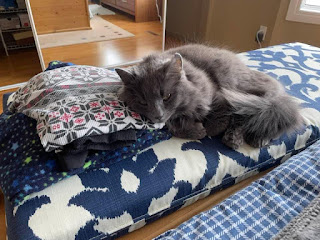
Tuesday Night Cat Blogging

Puzzled cats.


Tuesday Morning Links

This and that for your Tuesday reading.

- Andre Picard recognizes that stoking sentiment about being "done with COVID" only increases the likelihood of further transmission and mutation, while Gail Bowen writes about the need to cultivate the strength to push back rather than succumbing to a sense of futility. Gwynne Dyer discusses the far more justifiable fatigue with anti-vaxxers and deniers who are making the pandemic worse for everybody. The Canadian Press reports on Statistics Canada's finding that life expectancies saw their most severe drop in nearly a century as the pandemic began in 2020, while Phil Tank reports on the stark gap between what's been reported in Saskatchewan and the far higher number of deaths likely attributable to the coronavirus. 

- Katie Hyslop talks to young British Columbians about their eagerness to get fully vaccinated. Leana Wen discusses the need to update vaccine policies to account for the importance of third (and additional) doses in maintaining continued protection. And Katherine Wu is hopeful that a three-dose vaccine will eventually help to protect children under 5 - though the prospect of that development in the near future makes it all the more senseless that kids are currently being sent into viral incubators. 

- Saleemul Huq writes about the need for any effective climate action plan to address the loss and damage a deteriorating climate imposes on the people who can least afford it, while Oliver Milman notes that the rarely-recognized consequences of the climate crisis include massive interference with insect populations. 

- Fatima Syed highlights how businesses are cashing in on the Ford PCs' cancellation of a previous provincial climate policy - signaling how destructive climate policy represents a corporate giveaway as well as environmental negligence. And Michelle Gamage reports on the latest example of the polluting fossil fuel sector being put in charge of deciding what to bother fixing and cleaning up - this time being site contamination in British Columbia. 

- Meanwhile, Marc Lee, Belinda Li, Sue Maxwell and Tamara Shulman point out how a focus on a zero-waste society can create both economic and environmental benefits.

- Finally, Robert Reich argues that corporate sedition is an even greater threat to democracy than the violent political version. 

Monday, January 24, 2022

Monday Morning Links

Miscellaneous material to start your week.

- Katharine Wu examines how the effect of immunity is just one more area where people are seeing profoundly unequal results of the COVID pandemic - with a disproportionate burden being placed on those who were already facing disadvantages. Lauren Pelley reports on the current state of knowledge around long COVID, as well as the danger that many people may face symptoms and aftereffects for decades to come. And Ian Welsh discusses the example set by Western Australia in demonstrating that COVID has always been controllable - making for a particularly stark comparison to the resource-based provinces in western Canada which have instead chosen to let it run wild. 

- Jacob Lorinc points out that the workers who have left restaurant work during the course of the pandemic have done so for good reason. And Dan Darrah discusses the prospect of a four-day work week coming to Canada in the wake of successful trials elsewhere. 

- Diana Chen McNally and Naheed Dosani write that while we should be looking to eradicate homelessness altogether, we should at least ensure that all people have access to basic hygiene and sanitary services.

- Zoe Craig-Sparrow, Shelagd Day and Margot Young discuss how all levels of government in Canada have prioritized fossil fuel profits over Indigenous rights.

- Finally, David Climenhaga and Ryan Lindley each write about the combination of separatist fanaticism and cynical grifting behind the latest yellow vest convoy. 

Sunday, January 23, 2022

Sunday Afternoon Links

This and that for your Sunday reading.

- Alex Ballingall and Raisa Patel ask why Canada's federal government seems to have learned nothing from four previous waves of COVID. And Kari Dequine Harden writes about the large number of children saddled with the effects of long COVID because their leaders didn't bother to keep public health protections in place for the benefit of those who couldn't yet be vaccinated.

- Umair Haque discusses how the U.S.' elite consensus around unrestrained capitalism has led to its political ruin - and while the U.S. may stand out for now, it's not hard to see the same dynamic playing out in Canada and elsewhere. And Elizabeth Meager points out that investor protection agreements have been treated as barring countries from meeting their climate commitments. 

- Meanwhile, Phil MacDonald and Sarah Brown note that soaring energy costs in the UK are the result of continued reliance on fossil fuels. And Marc Fawcett-Atkinson writes that access to safe food is just one more area in which inequality of income and wealth feeds into disparities in other aspects of well-being.

- Finally, Stephanie Kelton discusses the dangers of treating reflexive interest rate manipulation as the only - or best - means of responding to inflation.

Saturday, January 22, 2022

Saturday Morning Links

Assorted content for your weekend reading.

- Katharine Wu writes that contrary to the continued attempt by right-wing talking heads to equate mass viral transmission with immunity, we can't assume that the spread of the Omicron COVID strain will offer substantial protection from future infection. Kayla Rosen reports on new research showing the widespread cognitive dysfunction caused even by COVID cases treated as "mild", while Moira Wyton points out the "test trap" facing people with less-than-life-threatening symptoms who may not have access to the testing needed to support claims based on disabilities. And Danielle Groen discusses what would be needed for governments to be able to responsibly reopen - which (spoiler alert) means far more than simply asserting in the face of all evidence that the pandemic is over.

- Ben Cousins reports that a majority of Canadians are now having trouble feeding their families, making for an 18-point jump from just a few years ago. Umair Haque discusses how the greed of the wealthiest few is impoverishing everybody else, while Michael Schaub reviews Peter Goodman's "Davos Man" as a helpful reminder as to where wealth and power is currently concentrated. And Andrew Perez and David Sirota highlight how the Senate filibuster serves not as a democratic check, but as corporate America's kill switch to prevent any meaningfully progressive policy from being implemented no matter how necessary or popular.

- Tanya Talaga reminds us that deaths in house fires within First Nations are traceable to the poverty and deprivation which have been structurally embedded in communities. And Mitchell Thompson exposes how Tom Flanagan and his Conservative cronies continue to engage in brazen denial of the horrors of residential schools.

- Finally, Douglas Todd discusses how Singapore has implemented strong incentives against speculation in its housing market, and suggests that Canada pursue the same.

Friday, January 21, 2022

Musical interlude

Cowboy Junkies - White Sail


Friday Morning Links

Assorted content to end your week.

- Claire Horwell highlights how masking and other continued public health measures to rein in spread to the extent possible are the only way to avoid catastrophic results from the Omicron wave. Mickey Djuric reports on leaked modelling reaching the same conclusion based on Saskatchewan data (as well as the call by labour for public health action based on the science). Tyler Barrow talks to both Cory Neudorf and Alexander Wong about the painfully-misinformed spin being used by Scott Moe to avoid doing anything to keep people safe. And Alexander Quon interviews Nazeem Muhajarine about the Saskatchewan Party's choice to abandon any effort to even track, let alone contain, the spread of COVID. 

- Matt Keeling et al. study what circuit breaker policies can achieve in limiting infections as well as severe health outcomes. And Chansavath Phetsoupanth et al. find that people who suffer from long COVID can be expected to have long-term immunological deficiencies as a result. 

- Katharine Smart weighs in on how the pandemic has exposed the weaknesses caused by decades of neglect of our health care system. Nora Loreto points out how even the most immediate problems are primarily the result of neoliberal governments rather than individual anti-vaxxers. And Emma York discusses the shift toward for-profit health care as both a cause and consequence of the current crisis. 

- Tony Seskus and Kyle Bakx discuss the mountains of money being hoarded by fossil fuel companies even as they demand massive public subsidies, while Anya Zoledzowski reports on Shell's Quest plant as yet another example of a CCS project which only adds to carbon pollution even at massive expense. Gordon Laxer rightly notes that the UCP's spin about "foreign-funded" environmentalists represents nothing but blatant projection as Jason Kenney seeks to send more cash to foreign-owned petrogiants. And David Suzuki calls out climate-denying media for demonizing the people working on transitioning toward a sustainable society. 

- Finally, John Michael McGrath examines the preliminary findings of Ontario's housing task force -which would go some way toward encouraging multi-unit development, if doing so in ways which seem to cater more to developers than to people in need of homes. 

Thursday, January 20, 2022

Thursday Morning Links

This and that for your Thursday reading.

- David Moscrop writes about the need for public policy which remedies inequality rather than exacerbating it - while recognizing that we're falling painfully short in response to COVID. Max Kozlov highlights how immune evasion, not a higher viral load, seems to be key to the Omicron variant's spread. And Christopher Murray discusses how global case rates are at their highest point yet - while any end to a pandemic as such looks to mean accepting a recurrent disease. 

- Zak Vescera reports that the Omicron wave continues to highlight longstanding shortages and weaknesses in Saskatchewan's hospitals. And Patrick Rail reports on the Canadian Medical Association's warnings about the consequences of delaying "elective" surgeries due to a virus that's been allowed to run rampant. 

- David Suzuki calls out the failure of our leaders to take meaningful climate action even in the absence of any rational argument against it. And Robert Tuttle reports on a push from scientists to avoid pouring public resources into carbon capture schemes designed to prop up a fossil fuel sector which can't be supported under any reasonable analysis.

- Rebecca Diamond and Enrico Moretti examine (PDF) U.S. standards of living by location, and find that the income available for people with less formal education is far short of what's necessary to maintain a reasonable standard of living in major cities.

- Finally, Yves Engler discusses how fighter jets and other big-ticket military expenditures are useless against any real-world threats to Canada.

Wednesday, January 19, 2022

Wednesday Morning Links

Miscellaneous material for your mid-week reading.

- Cory Neudorf asks that Saskatchewan not play Russian roulette with the Omicron COVID variant.  Rahul Suryawanshi et al. find that any theory of hoping for protection through infection is as foolish now as ever, since Omicron itself is limited in the immunity it encounters or provides against other variants. And Theresa Tam confirms the consensus that Omicron remains infectious for just as long as prior variants - making the push to shift people back to work sooner another example of wilful neglect of public health. 

- Meanwhile, Matthew Elmas discusses how Australia has slashed support payments to force gig workers to rush back to work rather than self-isolating. 

- Colleen Silverthorn reports on the desperate state of Saskatchewan long-term care homes fighting outbreaks among workers and residents alike. Laura Sang describes the brutal toll of a 16-hour hospital shift in the midst of a cresting COVID wave. And Laesa Kim is rightly outraged that her five-year-old daughter - like so many other people with other disabilities - is being sacrificed in the misplaced attempt to return to "normal". 

- Damian Carrington reports on new research showing that chemical pollution is yet another form of environmental damage which has crossed a boundary incompatible with a stable living environment. 

- Finally, Geoff Dembicki looks in depth at the manipulative police tactics and massive amount of public resources used to abuse women and undermine environmental activism. 

Tuesday, January 18, 2022

Tuesday Night Cat Blogging

Downturned cats.


Tuesday Morning Links

This and that for your Tuesday reading.

- Paul Kuodi et al. find some hopeful evidence that vaccinations may help to prevent long COVID symptoms as well as more acute ones. Nili Kaplan-Myrth rightly questions why safety is being treated as a privilege to be withheld from vulnerable people. And Yasmeen Serhan discusses how responsible leaders are challenging the anti-social actions of those who have chosen to remain unvaccinated, while Adam Hunter reports that Scott Moe's nonexistent public health response and insistence on coddling anti-vaxxers are being rejected by a growing majority of Saskatchewan's public. 

- Leyla Asadi, Raina MacIntyre, Lisa Brosseau and Trish Greenhaigh highlight the need to upgrade to respirators which effectively control the inhalation of viral particles. Josh Mark reports on John-Mark Opondo's call for people to self-isolate even with mild cold-like symptoms in order to reduce COVID spread. And Megan Ogilvie reports on Ontario's shortage of therapeutic drugs to treat COVID patients.  

- Taylor Lambert discusses the toxic mix of intimidation, disinformation and heavy-handed legislation that defines Jason Kenney's reign in Alberta - though one would be hard-pressed to find much basis for distinction from the governing philosophies of Scott Moe or Doug Ford. 

- Scott Schmidt calls out the familiar con being used once again by corporate spokesflacks to try to attack universality in health care. And Luke Lebrun reports on a new study documenting the Canadian Taxpayers Federation's deliberate choice to push racist messages and themes.  

- Matthew McClearn discusses how far Canada has to go in eliminating fossil fuel subsidies from a starting point of pouring more money into them than any other G20 country. And Amory Lovins and M.V. Ramana point out how a fully renewable power grid is entirely feasible with current technology - as long as we don't let climate deniers and corporate polluters set our energy agenda. 

- Finally, Joel Dryden reports on the effect of gig platforms on Alberta's labour market - including the reality that corporations are using apps as an excuse to avoid basic protections for workers who are actually their employees. 

Monday, January 17, 2022

Monday Morning Links

Miscellaneous material to start your week.

- Anthony Fernandez-Castaneda et al. examine the long-term neurological and cognitive damage caused even by "mild" cases of COVID. Sally Cutler discusses the implications of the Omicron COVID variant remaining transmissible longer than previously assumed even as governments and employers are adamant about forcing people back to work while infected. And Laura Unger reports on the warning from scientists that Omicron is unlikely to be the last major variant of a disease that's been allowed - and even encouraged - to keep spreading and mutating. 

- CBC's Cross Country Checkup offers some needed attention to workers who are already burned out even as more onerous demands get pushed on them. And Nadine Yousif reports on the growth of alcohol-related illnesses as the industry exploits people's fatigue and desire to escape. 

- Larry Elliott reports on Oxfam's latest research into the preposterous concentration of money through the pandemic that has seen the ten richest men in the world get twice as wealthy - as well as its call for a tax on windfall gains to rein in inequality while funding a healthy recovery. Hailie Tattrie interviews Alyssa Gerhardt about the need for systemic fixes to corporate food price gouging. And Sam Bowman theorizes that a dedicated push to make housing available and affordable could help ameliorate many other problems as well. 

- Sam Adler-Bell discusses how the Republican attack against critical race theory reflects their refusal to accept the very existence of systemic inequality and oppression. 

- Finally, Yannic Rack reports that big oil is paying far less than its share of Canada's carbon price. And M.V. Ramana discusses how the spin around small modular nuclear reactors represents nothing but a climate delay tactic which bears no plausible prospect of resulting in any practical energy solutions. 

Sunday, January 16, 2022

Sunday Afternoon Links

This and that for your Sunday reading.

- Katherine Wu warns that the worst of the Omicron COVID wave may happen even after case counts have peaked as continued spread (facilitated by people relaxing their prevention efforts) batters already-struggling health care systems. And Ingrid Torjeson discusses a new study from Japan suggesting that Omicron actually results in a longer viral shedding peak - meaning that the policies pushing people back to work earlier are resulting in their returning to workplaces when they're at their most infectious. 

- Eoin Higgins discusses how the experience of a crisis may push people to demand collective response to the problems which can't realistically be addressed at an individual level. And Saeed Kamali Dehghan reports on a new study showing the underreported climate emergencies which primarily affect the world's poorest populations.

- Meanwhile, Nick Pearce reports that the Boundary Dam CCS project is once again falling far short of even its own overpriced promises - even as the fossil fuel sector continues to demand tens of billions of dollars in subsidies to use a new set of CCS projects as an excuse to keep spewing carbon pollution.

- Zak Vescera reports on Scott Moe's choice to appoint an unqualified partisan hack to oversee the selloff of Saskatchewan's public health care system.

- Finally, the Globe and Mail's editorial board questions why the drug poisoning crisis is still being treated as an afterthought.

Saturday, January 15, 2022

Saturday Afternoon Links

Assorted content for your weekend reading.

- Jim Stanford discusses how Canada's COVID response has been slanted toward handouts to corporations and demands of workers - and increasingly so as the pandemic has continued. Alison Pennington calls out the cruelty by design in Australia's similar move toward eliminating pandemic leave as the worst wave yet crests. And Joe Vipond, Malgorzata Gasperowicz, Wing Kar Li and Michelle Brandenburg discuss what people can do to help protect their community against the Omicron variant even as political leaders refuse to lift a finger.

- Adam King writes that CEOs have made out like bandits throughout the pandemic. And Leticia Miranda reports on the call from retail workers for at least a modicum of the respect and concern which was offered in early 2020 but withdrawn as soon as bosses figured they could get away with it.

- Justin Ling notes that the worsening national health care crisis could have been averted even if promises from earlier in the pandemic had been kept. And Moira Wyton discusses the precarious state of Vancouver's hospitals even before the Omicron wave hits at its worst, while Jeremy Simes reports on the collapsing health care system in rural Saskatchewan.

- Meanwhile, Adam Hunter talks to Nazeem Muhajarine about the complete lack of any scientific basis for Scott Moe's aversion to public health protections. And Phil Tank reports on the Saskatchewan Party MLAs embedding themselves in the anti-vaxx movement - even as they're too cowardly to acknowledge it.

- Finally, the Tyee offers space for people to comment on their experiences and views on the return to school in the midst of the Omicron wave.

Friday, January 14, 2022

Musical interlude

Glass Animals - Heat Waves


Friday Morning Links

Assorted content to end your week.

- Katherine Wu calls out the wishful thinking (and deliberate neglect) behind any attempt to brand the Omicron COVID variant as "mild". Evelyn Lazare discusses the vicious circle created as the health care workers expected to care for the sick themselves become infected in droves by a disease that's been allowed to run rampant. And Ian Welsh offers a grim prognostication as to the consequences of the anti-precautionary principle being applied by Ontario's government (among so many others). 

- Meanwhile, Nathaniel Dove reports that the side effects of COVID include an escalating number of Saskatchewan people dying while waiting for surgery. And Kendall Latimer reports that the province also reached record highs in deaths due to drug poisonings, thanks in no small part to the provincial government's hostility to harm reduction and social determinants of health.  

- Dorothy Woodend responds to one of the main criticisms of Don't Look Up by arguing that we're long past any time for subtlety in dealing with a climate breakdown in progress. Maya Yang reports on research showing a strong majority of Americans recognizing the need for climate action - though sadly there's little reason to believe that will be reflected in policy outcomes. And CBC's What On Earth contrasts the progress other jurisdictions are making in transitioning away from fossil fuel infrastructure against Ontario's choice to build an increased number of natural gas connections. 

- Joseph Politano breaks down the components of the U.S.' current inflation, and finds no reason for concern about a wage-price spiral threatened as an excuse to impose punishing austerity on workers. 

- Finally, Linda McQuaig is hopeful that a new child care plan will remind Canadians of the value of investing in social development - but notes that the idea could go awry if it's hijacked by corporate profiteers, rather than building a public service. 

Thursday, January 13, 2022

Thursday Morning Links

This and that for your Thursday reading.

- Gloria Novovic writes about the desperate need to start planning ahead to control the damage done by the COVID pandemic, rather than reacting only to calamities already in progress. Ed Yong highlights why there's no reason to minimize the effect of the coronavirus based on "incidental" infections which still impose massive costs on an overwhelmed health care system. Mary-Ann Davies et al. study the prevalence of severe outcomes in the course of South Africa's Omicron wave, and find that any change in the virus itself (rather than vaccination or other immunity rates) has produced only a 25% reduction in risk of hospitalization or death compared even to the most severe Delta wave. And Christina Frangou offers a look at the effects of long COVID on people who have continued to suffer illness and disability long after even mild initial cases. 

- Michael Osterholm and Cory Anderson call out the misleading message that stubbornly keeping schools open without taking steps to protect staff and students is a remotely plausible option. And Mickey Djuric reports that Saskatchewan's already-strained education system is being forced to carry out contact tracing responsibility abandoned by public health structures. 

- Meanwhile, Olga Khazan notes that the lack of paid sick leave and other supports is forcing people to keep dragging themselves to work while infected. Basit Mahmood points out how the combination of stagnant incomes and rising rents and prices is leaving more and more UK households destitute. And Errol Schweiser discusses how food price inflation in particular is a matter of profit-taking by large corporations with the power to control the market. 

- D.T. Cochrane examines how corporate Canada has already stopped contributing any income taxes to Canadian society to for the year. And Dan Darrah calls out the Canadian Federation of Independent Business for its relentless attacks on workers and people who rely on public services. 

- Finally, Jeff Seal, Chris Libbey and Rick Libbey discuss the importance of moving toward a just cause standard for eviction based on the recognition that housing is a human right. 

Wednesday, January 12, 2022

Wednesday Morning Links

Miscellaneous material for your mid-week reading.

- Sarath Peiris discusses the Saskatchewan Party government's utterly feckless pandemic response - which they've apparently decided to keep in place for the rest of the Omicron wave. And Abdullah Shihipar points out the folly of expecting individual choices to resolve a collective action problem. 

- Wallis Snowdon reports on the UCP's laughable decision to let employers dictate when employees are required to work even while infected with COVID. Rachel Bergen reports on the spate of outbreaks in Winnipeg care homes. And Cathy Crowe discusses how Toronto's system of shelters has collapsed due to preventable neglect. 

- John Michael McGrath writes about the issues the pandemic has raised about capacity in our health care system. And Stephen Magusiak points out how privateers are seizing on the lack of resources in the public system to push for even more profit-based health services.  

- Finally, Luke Savage discusses how workers have been suffering the ill effects of COVID while their bosses get even richer. Amira Elbaghawy reminds us of the problems with relying on the corporate sector to decide what social and environmental work should be done. And Molly Murphy examines the RCMP's Community-Industry Response Group which has been using the force and surveillance of the state to in the service of fossil fuel barons fighting against Indigenous and environmental activists.  

Tuesday, January 11, 2022

On unearned compensation

One of the most striking recent developments in Saskatchewan's COVID response has been the disconnect between Scott Moe's government telling people not to get PCR tests due to their utter failure to provide them, and the Workers' Compensation Board declaring that nobody will be able to make a claim for workplace illness without one.

But let's set aside any doubt as to who figures to benefit from that policy by remembering what happens when the Workers' Compensation system finds itself with a surplus under the Saskatchewan Party .

To wit: employers get a windfall to the exclusion of workers. But there is one exception: public employers, who see any reward for safe workplaces siphoned off into the province's general revenue. 

So if Moe is successful in preventing people from being able to establish that COVID-related disabilities arose at work, the likely result is...for the funding intended to support workers in exactly these types of situations to be diverted to the Saskatchewan Party's corporate donors. 

Though to be fair, anybody who can't wait a full day for one of the insufficient number of tests available through the public health care system always has another option: paying another Saskatchewan Party donor to get one. Because we're all in this together.

Tuesday Night Cat Blogging

Contained cats.


Tuesday Morning Links

This and that for your Tuesday reading.

- Charlie Smith highlights how attempts to minimize the ongoing pandemic have reduced the public credibility of both government and public health officials alike in British Columbia (even as they've provided a messaging boost to anti-vaxxers). Nam Kiwanuka laments how parents have been left to fend for themselves, while Dan Sinker notes how the choices have been all the more grim in jurisdictions which sent kids immediately back to school. Bruce Arthur discusses how the misleading spin of a "mild" variant has led both governments and citizens to fail to take a severe threat seriously. And the Globe and Mail's editorial board asks why Canada has so far to go in vaccinating young people when there's ample vaccine supple to get it done. 

- Megan Ogilvie examines how the Omicron wave is devastating Ontario's health care system and the people who rely on it. Josh Rubin reports on the economic losses caused by workers getting sick in the absence of appropriate public health protections. And Angelyn Francis writes about the steps we need to take to protect people with disabilities from the continuing pandemic. 

- Victoria Forster reports on new research suggesting that the Omicron variant reaches peak transmissibility around 3-6 days after symptom onset - meaning that public health rules assuming a 5-day period is sufficient after a positive test may be pushing people back to work when they're most infectious. And Linda Geddes reports on the relatively good news that COVID loses most of its infectiousness within five minutes in the air - though that will only help if we take the steps needed to reduce contacts which raise the potential for short-range infection.

- Bob Weber reports on Alberta's complete failure to deliver on promised environmental monitoring for the tar sands. And David Climenhaga calls out the combination of climate delay and publicly-funded cronyism behind the UCP's attempt to push nuclear power rather than cheaper and readily-available renewable alternatives. 

- Finally, David Hope and Julian Lindberg study the effects of tax cuts for the rich - and unsurprisingly find the result to be worsened inequality without any benefit in total economic activity or productivity. 

Monday, January 10, 2022

Monday Morning Links

Miscellaneous material to start your week.

- David Wallace-Wells writes that the U.S.' Omicron COVID wave looks far more severe than Europe's - even if it isn't being met with any meaningful policy response. Chuck Wendig criticizes the inexcusable choice of so many governments to let COVID win rather than working to keep people healthy. And the Canadian Press reports on the widespread hospitalization records being set in the face of a variant which have dangerously tried to portray as "mild". 

- Joel Dryden reports on yet another outbreak at the same Cargill meat plant where management staff and government personnel both gleefully chose worker endangerment at the outset of the pandemic. And Anne D'Innocienzio and Dee-Ann Durbin report on the ugly choice facing workers being forced to work while sick if they want to have any income. 

- Alex Ballingall discusses how the latest wave has further highlighted longstanding weaknesses in health care systems which have been treated like providers of consumer goods rather than essential services. Jennifer Sinco Kelleher and Terry Tang report on the breakdown of all kinds of public services due to mass infection, while Jessika Guse reports on a new memo showing how Alberta's health care system faces mass redeployment to try to continue functioning. 

- Richard Mueller refutes the UCP's spin about needing to slash public servants' incomes. And Harold Meyerson reports that the National Labour Relations Board is examining how to protect workers in gig employment - including through a potential presumption that improper classification of workers as independent contractors rather than employees is itself illegal.  

- Drew Anderson reports on the environmental damage done by the oil industry in Alberta - and the liability now being borne by people who later came to own contaminated properties. But Jon Stone reports on the UK Cons' continued willingness to let fossil fuel barons write the rules governing their industry as a signal that governments are refusing to learn anything from decades of pollution, spills and misinformation. 

- Finally, Robert Reich discusses where we can still find and strengthen the public good in a deliberately atomized society. 

Sunday, January 09, 2022

Sunday Afternoon Links

This and that for your Sunday reading.

- Trevor Herriot and Cathy Holtslander write about the Saskatchewan Party's climate position which can't be treated as anything but implicit denialism. John Woodside points out that the Libs' fuel regulations seem designed to lock us into decades of avoidable fossil fuel use, while Bill McKibben takes note that an inexcusable amount of carbon pollution is happening solely for the sake of producing and transporting other fossil fuels.

- Meanwhile, Nicole Poindexter discusses how it's possible to simultaneously end energy poverty and transition away from dirty energy with renewable minigrids and battery storage.

- The Star's editorial board highlights how wealth accumulation at the top comes at the expense of everybody else, while Robert Kuttner discusses Thomas Piketty's road toward advocacy for socialism and wealth redistribution. Connie Lin discusses how U.S. workers are using their increased recognition as to unfairness in the workplace as a reason to leave exploitative jobs. And Steven Hall points out what Don't Look Up can teach us about economics, including the desperate need for publicly-oriented planning to replace subservience to capitalists. 

- Jen St. Denis reports on Paul Kershaw's call for a windfall tax on high-priced real estate. 

- Zak Vescera reports on the glaring need for additional staff and resources to run shelters in Saskatoon (and elsewhere in Saskatchewan). And Bonnie Larson, Ginetta Salvalaggio and Claire Bodkin discuss how a safe-supply policy would work wonders in mitigating the drug poisoning crisis. 

- Finally, Amil Niazi writes that parents are now facing the same challenges as at the beginning of the pandemic, only with far less support and with two years of fatigue weighing them down. And Shannon Proudfoot discusses the problems with virtual learning - even as the damage caused by that pales in comparison to the risk of lifelong health conditions.

Saturday, January 08, 2022

Saturday Afternoon Links

Assorted content for your weekend reading.

- John Michael McGrath writes that the Omicron wave of COVID may manage to be the most disruptive year, while Alex Press discusses how its effects at an individual level may differ drastically based on one's income.

- Ed Yong warns that the U.S.' health care system is grossly underequipped to deal with the Omicron wave. Ashleigh Stewart reports on the impending nursing shortage in Canada, while Nicholas Frew reports on projections that Alberta will soon see record high hospitalization levels. Lindsay Tanner and Mike Stobbe report on the U.S.' soaring COVID hospitalization numbers among children too young to be vaccinated. Roni Caryn Rabin notes that even children who recover from initial symptoms are at a higher risk of developing diabetes.

- Sharon Kirkey summarizes the current state of knowledge around long COVID - including the devastating effects people have suffered already, and the great unknowns about longer-term damage. Reuters reports on Finland's warning that it may become the country's largest and most severe chronic disease.

- But in case anybody thought greater awareness of the consequences of COVID and its variants would lead to more responsible choices, Adam Hunter reports on the Moe government's refusal to implement any limitations on gatherings even as health officials beg people to be more responsible than their political leaders. Jim Stanford rightly calls out the trend of Canadian employers demanding that employees come to work while infected and infectious, while Alex Press points out the same trend in the U.S. And Katherine Wu discusses the complete lack of logic behind the CDC's latest self-isolation guidelines.

- Finally, Scott Schmidt blasts the conservative messaging machine for having the nerve to blame others for the decisions of right-wing governments to expose people to avoidable risk while undermining any public response.

Friday, January 07, 2022

Musical interlude

Bonobo feat. Jordan Rakei - Shadows


Friday Afternoon Links

Assorted content to end your week.

- Bruce Arthur writes that Doug Ford's photo ops around empty hospital beds don't signal any useful accomplishment when they're not paired with solutions to the staffing crisis. Jessie Anton reports on the alarm bells sounding about Saskatchewan's health care system, while Nathaniel Dove highlights Cory Neudorf's recognition that we need to do far more to limit community transmission in order to make schools anything close to safe. Sara Mojtehedzadeh points out how people stand to lose out on treatment and income supports due to the lack of availability of COVID tests, while Kendall Latimer reports on the statement by Saskatchewan's Workers' Compensation Board that the Moe government's attempt to get people not to have PCR tests done will deprive anyone who listens of their expected income support. Colin Furness makes the case for a broad shift to wearing N95 masks. 

- Max Fawcett discusses the need to stop putting up with the anti-social effects of anti-vaxxers and the right-wing politicians who coddle them. 

- Hadas Thier makes the case for a response to inflation which reins in profiteering while ensuring people have the resources they need to secure the necessities of life. And Stephen Wentzell notes that workers actually stand to benefit from the economic conditions which lead to inflation - as long as the rug isn't pulled out just as gains start to filter down to the people who have contributed to larger profits. 

- Finally, Phil McKenna reports on the environmental fallout from poorly-regulated fossil fuel extraction and processing - including far more abandoned wells than may have previously been assumed.  

Thursday, January 06, 2022

Thursday Morning Links

This and that for your Thursday reading.

- CBC News reports that Saskatchewan's children's hospital is among the health care facilities with an internal outbreak, while Laura Sciarpelletti talks to some of the parents begging the provincial government to limit transmission in schools.

- Moira Wyton reports on British Columbia's warning to businesses that they need to be prepared for major worker shortages - though the apparent decision to let that happen only following the spread of a disease rather than through choices which actually keep people healthy is left without any adequate explanation. And Josh Rubin notes that while corporate interests and deficit scolding have dominated most discussion of COVID policy, it's workers who are being faced into impossible choices in trying to get by now that public supports have been slashed.

- Robert Reich describes the "Potterizing" of the U.S. as policy is systematically made to enrich corporate oligarchs and rent-seekers rather than to benefit people. And Noah Smith interviews Ryan Petersen about the causes of the supply chain crisis - including the short-term focus on shareholder payouts rather than investments in people and infrastructure.

- Nathan Robinson writes that the backlash against Don't Look Up misses the central point contrasting the self-interest of billionaires against the possibility of collective action. And George Monbiot discusses how the movie mirrors his experience as a climate campaigner. 

- Leyland Cecco reports on the continued spread of an unexplained neurological condition among New Brunswick children in the face of alarming official denial.

- Erika Shaker makes the case for student loan relief to ensure that people who have worked toward higher education aren't limited in their future choices due to resulting debt.

- Finally, Jeremy Sherman discusses the need to make sure that the all-too-familiar sociopathic model of political communication is challenged and weakened. And Johann Hari writes about the concerted effort to undermine our ability to concentrate rather than having our attention dictated by corporate manipulations.

Wednesday, January 05, 2022

Wednesday Morning Links

Miscellaneous material for your mid-week reading.

- Madhukar Pai and Manu Prakash discuss how artificially limited vaccination is allowing COVID variants to get the jump on any attempt to protect public health, while Felicia Ceban et al. find that widespread fatigue and cognitive impairment are among the prices of letting the coronavirus run rampant. An open letter calls out Francois Legault for again using ineffective curfews as a substitute for effective public health measures in workplaces and commercial environments, while Bruce Arthur notes that Ontario's delayed reaction may come too late to have any discernible impact. And David Leonhardt discusses how far too many political leaders have prioritized profit-making and adult convenience and entertainment over children's well-being and development, while Maggie Astor writes about the agonizing choices parents face where governments haven't left any tolerable options. 

- Meanwhile, Kate Pickett et al. study the social determinants of children's health, along with the causes of health inequity. And Jeremy Appel reports on the National Advisory Council on Poverty's latest report showing the path out of poverty for marginalized people in the wake of the pandemic.

- Rebecca Altman highlights how plastic production is both worse for the climate than we're generally led to assume, and mostly avoidable if we don't allow the fossil fuel industry's manufactured demand to dictate our economic choices. 

- Rick Smith is hopeful that we can make a path toward climate progress into a normal and boring aspect of life. Ashley Kulkarni writes about a few of the options for more urban design and planning that better mitigates against the effects of climate change. And Julius Melnitzer highlights how energy workers are transitioning away from fossil fuels on their own.

- Finally, Dyanoosh Youssefi points out the need to stop over-incarcerating Indigenous people. 

Tuesday, January 04, 2022

Tuesday Night Cat Blogging

Grasping cats.


Tuesday Morning Links

This and that for your Tuesday reading.

- Shree Paradkar laments the folly of making the same mistakes over and over again throughout the course of a continuing pandemic, while Crawford Kilian offers his own list of lessons we should have learned by now. And Andrew Nikiforuk provides some suggestions to people navigating the newest wave - including going beyond the minimum (or lower) standards that have been established by governments who seem all too willing to let the Omicron variant tear through their populations.  

- Austin Landis and Reuben Jones report on Anthony Fauci's recognition that even cases classified as "mild" may lead to a lifetime of long-haul neurological and other symptoms. Peter Hall et al. find direct relationships between both infection and symptom severity, and cognitive dysfunction. And as COVID minimizers try to excuse their own negligence by distinguishing between health effects "with COVID" and "from COVID", Firas Raheman et al. conclude (PDF) that the coronavirus correlates with more severe outcomes even among patients with a condition as obviously unrelated as a hip fracture. 

- Stephen Maher writes about the importance of countering the flood of misinformation spilling out from the U.S. And Paul Frost, Marguerite Xenopoulos, Michael Epp and Michael Hickson discuss how to push back against antivaxxers and other bad-faith actors. But Richard Luscombe reports on Thomas Homer-Dixon's warning that propaganda may be the least of our worries if the U.S. comes under a right-wing dictatorship - as seems all too plausible over the next few years.  

- David Milstead reports on the massive bonuses taken by grocery executives at the same time they've raised prices on consumers and slashed any pandemic benefits for workers. And the CCPA points out another year of gross inequality between CEOs and workers generally, even as compensation structures were reconfigured to allow employers to take wage subsidies. 

- Finally, Anton Jager discusses how the supposed "post-politics" era has given way to "hyper-politics" in which issues are recognized to be political, but a lack of organization makes it impossible to actually give effect to people's preferences and interests. 

Monday, January 03, 2022

On voluntary efforts

The past few days have seen the emergence of an effort to build up self-reporting capacity to fill in where provincial governments are choosing to be wilfully blind to COVID caseloads - as well as a response questioning whether people should be willing to provide information to that project. 

Now, I certainly wouldn't dispute the point that if governments at any level were putting resources into a reliable source of COVID case tracking data tied into a reliable testing sample, we'd be far better served using that than any voluntary alternative. 

Sadly, that option doesn't exist. To the contrary, plenty of provinces are doing everything in their power to push testing (and thus results) into the private and personal realms, while also withholding the information they do have in their possession.

That game-playing with crucial public health information would be dangerous enough as a matter of normal accountability. It's downright suicidal where the same governments going out of their way to close the door on case tracking are the sames ones who have repeatedly launched into a "nothing to see here!" routine even when it was a matter of widespread awareness that cases, hospitalizations and deaths were spiking. 

We shouldn't respond to deadly know-nothingism by simply accepting the self-interested decision of negligent leaders that nothing can be known. And the attempted alternative - flawed though it's been so far - serves as an example of what citizens may need to do in order to account for governments abandoning all sorts of fields where action would be in the public interest. (This is a familiar issue given the development of tent cities, harm reduction sites and other stopgap community measures which have emerged to take care of people whose lives apparently aren't seen as worth saving by the people who hold the power of the state.)

From the standpoint of having a means of actually collecting data about a pandemic which governments are all eager to put out of sight and out of mind, we should be applauding - not criticizing - the people putting in the time to assemble one. And from the standpoint of collecting information, it's also worthwhile for people to consider reporting rather than rejecting the possibility of non-state data collection - once we can be satisfied that there isn't undue risk in providing our own information. 

In the case of ReportMyRapidTest, it's worth noting that there was some thought as to levels of privacy within its initial design, which makes names and other identifying information optional. And to his credit, since the systemic problems with the initial database were pointed out, Kevin Liu has recognized the need to start putting together appropriate security architecture and privacy governance to ensure that any sensitive information actually provided is properly protected.

From here, the path forward should then be for people with concerns to participate in strengthening the protection the voluntary site is able to offer, ideally to allow it to reach a level of security which makes them comfortable participating as well. 

Ideally, the end result will be for our political leaders to get back into the picture based on the recognition that it's an embarrassment for community-minded volunteers to have to develop alternatives to basic government functions. But if they refuse to do so, we're far better off cooperating to redevelop the pillars of civil society, rather than simply taking the word of ideologically-driven politicians that they need to be left in ruins.

Monday Morning Links

Miscellaneous material to start your week.

- CTV reports on Alberta Health Services' recognition that tens of thousands of the province's residents project to suffer from long COVID. Alex McKeen reports on Ontario's missing health care workers as the Omicron variant runs rampant, while Enzo Dimatteo examines the potentially catastrophic consequences of a collapse in testing capacity. Clare Ansberry and Nidhi Subarraman chime in on the growing recognition that cloth masks fall short of cutting down sufficiently on the spread of Omicron. And Emily Oster discusses the risks of COVID for small children who can't get vaccinated.

- Tobias Debell and Mathieu Rousselin ask whether it's possible to move past the neoliberal belief system which has exacerbated the pandemic (along with so many other crises). And Andrew Parkin notes that while public opinion in Canada has changed very little in the wake of COVID-19, the general population remains strongly in favour of using the power of government to reduce inequality between the rich and the poor.

- Meanwhile, Branko Marcetic writes that Don't Look Up is particularly noteworthy in exposing the sheer stupidity of political discourse in comparison to the seriousness of the issues which actually require political resolution.

- David Wallace-Wells discusses the horrifying urban firestorms in Colorado as a new development in the breakdown of our climate. Harry Brechner, Anna Greenwood-Lee and Richard Kool call for a coherent and focused social fight to prevent it from deteriorating further. And Heather Short pushes people to move from words to direct climate action.

- Finally, Philip Goff writes that a land tax could go a long way toward ensuring the people with the most wealth contribute their fair share toward a society that works for everybody.

Sunday, January 02, 2022

Sunday Afternoon Links

This and that for your Sunday reading.

- Ryan Cooper highlights the reasons to be careful about any COVID minimizers seeking to declare the Omicron variant as too mild to cause problems for our health care system. Ryan Patrick Jones reports on the choice of Ontario (and other provinces) to choose out-of-control transmission over any effort to limit the magnitude of the fifth wave. And David Robertson and Peter Doshi discuss what it means to end a pandemic - though it's worth noting that several attempts to declare it over by their definition have already given way to the realities of ongoing death and destruction.

- Eric Doland reports on new research showing a less-than-surprising connection between COVID denialism and infection with the disease. And Devi Sridhar discusses how weaponized misinformation has also resulted in threats to the experts working to keep us up to date with accurate data.

- Meanwhile, Tim Lister discusses how Cuba and other Latin American countries have been able to achieve an exceptionally high vaccination rate - with Cuba's home-grown vaccine development and manufacturing serving as a particularly positive success story.

- Catherine Bennett writes about the folly of demanding that satire such as Don't Look Up be toned down to be less absurd than the reality it's attempting to mimic. 

- And finally, if we needed more examples of our laughable neglect of the climate breakdown, Bloomberg reports on one U.S. operator's methane cloud visible from space which didn't need to be reported for emissions accounting purposes because it arose out of normal maintenance activities.

Saturday, January 01, 2022

Saturday Morning Links

Assorted content to start your year.

- Alex McKeen discusses the implications of the more transmissible Omicron COVID variant - though contrary to the plans of your local murderclown, we shouldn't take an increased likelihood of exposure as an excuse to let a dangerous disease tear through more people than can be avoided. And Mark Gollom reports on the increasing recognition that the need for improved masks applies to children as well.

- Sheila Block highlights how we should be responding to inflation caused by specific factors by addressing those issues, not through general austerity which stands to punish people already stressed by a pandemic. And Isabella Weber points out that price controls also offer the prospect of reining in temporary inflation by targeting profiteering corporations.

- Michael Sinato reports on the increasingly active labour movement south of the border. But Robert Cribb, Kelly Bennett and Emma Jarratt remind us that the corporate sector will happily abuse workers and deny all knowledge as a primary business strategy. 

- Finally, Thomas Homer-Dixon discusses the need for Canada to prepare for its own future in the shadow of a collapsing U.S. next door.