Tuesday, February 06, 2024

Tuesday Morning Links

This and that for your Tuesday reading.

- Cordell Jacks writes about the need for an economic model which evolves beyond the short-term exploitation of people and the planet. And Jessica McKenzie interviews Charlotte Kukowski about the importance of reprioritizing in the context of readily-apparent feedback loops between inequality and the climate crisis. 

- Daria Shapovalova reports on a landmark court decision determining that oil companies won't be able to avoid answering for downstream emissions in environmental assessments in Norway. But sadly, both Canada and the UK are continuing to rush through as much extraction and export as possible before anybody applies that standard to their fossil fuel sectors. 

- Marcus Baram reports on new legislation under consideration in New York which would ensure that large-scale wage thieves lose the privilege of doing business. 

- Adam King writes about the fight of Saskatchewan's teachers for tolerable working and learning conditions - and the Moe government's determination to avoid providing anything of the sort. 

- Aaron Wherry asks whether Justin Trudeau is reaching the point of regretting not keeping his promise of a fair and proportional electoral system. 

- Finally, Luke LeBrun points out that Stephen Harper's International Democrat Union has quietly scrubbed its links to Narendra Modi’s Bharatiya Janata Party - though the main news appears to be that  there exists a level of authoritarianism that even the IDU will disclaim. 

Monday, February 05, 2024

On harm exacerbation

Ryan Meili offers an important values-based critique of the Sask Party's "do more harm" policy on addictions treatment. But it's worth taking a closer look at who stands to benefit from the pursuit of harm maximization and treatment-for-profit.

A single private business, ROSC Solutions Group, has been trotted out by the Moe government at various points as an adviser and author of a report, an "expert" validator and a source of rebuttals against the people calling to continue work on harm reduction. 

Presumably that combination of consulting and PR work hasn't been carried out for free. And it's telling that the primary party apparently willing to say anything supporting the Sask Party's position is the one which has been hand-selected and paid to support the government's line. 

Meanwhile, it's abundantly clear who stands to receive ongoing public funding as a result of the plan.

As part of the incomplete list of spaces to date, EHN Canada is listed as being funded for both virtual and in-treatment care. (The inclusion of virtual programs as part of the government's promised number of spaces is left as a degradation of health services for another day.)

And in case there's any doubt about its goal of using public funds to build a private care system, EHN's own intake page for online services lists Saskatchewan's funding alongside a general assumption of patient-paid treatment:

Worried About Paying For Treatment? 

We know not everyone has the same financial situation. There are options when it comes to covering the cost of treatment, give us a call to discuss the possibilities. 

We are proud to have partnered with the Saskatchewan Health Authority to provide funded treatment for our online substance use disorder program to residents of Saskatchewan. Click here to learn more.

Not surprisingly, both of those actors seeking to profit from attacking harm reduction and emphasizing unregulated, for-profit "recovery" are tied into similar movements in B.C. and Alberta - as documented by Rumneek Johal last year. (ROSC is listed as having done similar work for Alberta, while EHN has a dubious and controversial history of work in both B.C. and Alberta.)

To be sure, there's also a moralistic "war on some people using some drugs" at play as well. But while the cruelty may be the point for parts of the Sask Party's base, the overarching purpose again looks to be the funneling of public money into connected businesses - no matter how much harm is done as a result.  

Monday Afternoon Links

Miscellaneous material to start your week.

- Claude Lavoie examines the problems with the far-too-rarely-questioned assumption that public policy needs to be oriented toward top-end economic growth at the expense of human well-being and environmental sustainability. 

- George Monbiot calls out how the wealthiest few have torqued the law to achieve impunity for themselves while punishing anybody who dares to question their dominance. Steven Staples points out that a Canadian public inquiry into foreign interference is conspicuously refusing to even recognize the control over decision-making exercised by Big Foreign Oil. And Ethan Cox exposes how a private surveillance company is spying on journalists with the apparent support of both the Alberta and federal governments, while Amanda Follett Hosgood points out that the RCMP's unit formed to ignore the rules and force through pipelines is now being turned against other activists (including people protesting for Palestinian human rights). 

- Meanwhile, Sharon Lewis offers a reminder that insurance companies aren't buying the climate denial being pushed on the public at large - with the result that people are increasingly unable to get insurance to cover foreseeable disasters. 

- Benjamin Shingler reports on Canada's lack of effective regulation to weed out false greenwashing. And Andrew Hawkins discusses Ian Walker's research as to how vehicles are designed to filter out awareness of their harmful effects (even as they become perpetually more dangerous for everybody else in the vicinity of the road). 

- Finally, David Climenhaga writes about Danielle Smith's choice to declare war on trans kids, while Amnesty International Canada calls it out as a glaring violation of human rights. And Corinne Mason and Leah Hamilton point out the complete absence of any factual basis for the UCP's campaign of hate. 

Friday, February 02, 2024

Musical interlude

Everything But The Girl - Caution To The Wind


Friday Morning Links

Assorted content to end your week.

- Ian Welsh discusses how COVID-19 is the second-most important story in the world - and how our failure to respond with appropriate regard for human life and well-being mirrors our inability to address any social challenge. And Ruth Link-Gelles et al. find that the latest vaccine update has been highly successful in reducing symptomatic - confirming again that the problem is not a lack of technical expertise to reduce the risks of an ongoing pandemic, but the total absence of will to acknowledge people need to act to protect themselves and others.  

- John Woodside weighs in on the eleven-figure combined cost of federal handouts to fossil fuel companies. And Environmental Defence highlights how continued subsidies to dirty energy operators represent a violation of multiple commitments - both in political promises and international agreements. 

- The Guardian rightly argues that a status quo in which the vast majority of people are squeezed dry in order to enrich the greedy few is utterly unsustainable. And Akielly Hu talks to Kohei Saito about the merits of focusing on degrowth in connection with improved equality and well-being. 

- Tim Querengesser discusses what Canada has lost in abandoning passenger rail as an affordable, low-stress form of transportation (while pouring obscene amounts of money into expanding highways).  

- Finally, David Climenhaga doubts that Albertans are about to accept Danielle Smith's attempt to substitute corporate pharmacies for access to primary health care. 

Thursday, February 01, 2024

Thursday Afternoon Links

This and that for your Thursday reading.

- Stephanie Soucheray examines new research showing that a large majority of respondents have concealed infectious diseases out of perceived economic or social necessity. And Zoya Teirstein discusses modeling showing that we're vastly underestimating the death toll from the climate crisis - with roughly 4 million lives lost just so far.

- Katrina Miller highlights the desperate need for Canada to stop throwing massive public subsidies at dirty fossil fuels. But David Thurton reports that we're instead underestimating planned giveaways to the fossil fuel sector by ten-figure amounts - even as a program to fund fuel pumps is about to run out of money.

- Corporate Knights examines how fossil gas production and consumption results in dangerous methane leakage at every turn. And Jennifer Ellen Good discusses how a "turn it off" approach produces far superior results to hoping for a transition without taking steps to achieve it.

- Rick Spence calls out Danielle Smith for her consistent dishonesty in attacking any climate action. And Paula Simons is rightly offended to see Smith determined to strip away the rights of children in order to cater to the bigots who have taken over her party.

- Finally, Ajit Niranjan reports on a study showing that vehicles are growing wider in the EU, while Jonathan Gitlin discusses research finding a predictable connection between hood height and pedestrian fatalities. And Sarah Wesseler observes that reductions in urban speed limits are producing safer streets for everybody who uses them.

Wednesday, January 31, 2024

Wednesday Afternoon Links

Miscellaneous material for your mid-week reading.

- David Michaels, Emily Spieler and Gregory Wagner examine how negligent pandemic policies (even when COVID-19 wasn't being treated as a matter of general denialism) resulted in tens of thousands of worker deaths in the US alone. Olivia Man et al. find that prenatal exposure to COVID may produce severe health effects, while Mary Kekatos points out how the continued spread of respiratory viruses increases the risk of heart problems. And Nate Bear discusses why it will never be accurate to treat COVID as "just a cold".

- Oliver Milman reports on new documents showing that the dirty oil industry has had - and suppressed - warning about the damage expected from climate change since at least 1954. And Robert Jones reports on just another oil round of deceit, as oil companies in New Brunswick have been falsely claiming they're subject to higher federal regulatory requirements in order to gouge consumers. 

- Joseph Keller, Manann Donoghoe and Andre Perry write about the climate impacts of AI and other tech industries which pretend there's no cost or environmental harm from consuming immense amounts of energy. Adrienne LaFrance writes about the rise of techno-authoritarianism as the dominant ideology of the tech giants. And Thomas Germain reports on research showing that search results are becoming demonstrably worse due to the combination of increased focus on advertising dollars, and the gaming of search algorithms by spammers.  

- Cory Doctorow writes about the decades-long slumber of regulators - and the hope that they're starting to regain consciousness. And Meghan Smith highlights a few stories which illustrate the value of a right to repair taking priority over corporate control over products. 

- Finally, Rachel Donald and Tim Parrique discuss how individual-level deprivation is entirely the result of grossly distorted distribution rather than a lack of overall output - meaning that the only means to ensure people's needs are met is to focus on redistribution rather than endless growth. 

Tuesday, January 30, 2024

Tuesday Night Cat Blogging

Cushioned cat.


Tuesday Morning Links

This and that for your Tuesday reading.

- Colin Carlson discusses why we should be treating the climate crisis as a health emergency (while also recognizing that such a thing demands urgent action rather than enforced denial). Debra Werner discusses the progress being made on at least identifying methane emissions which have previously gone undetected, while Laurie Winkless writes about the severe underreporting of pollution from the tar sands. And NASA notes that Greenland's ice sheets are in worse shape than previously recognized. 

- Meanwhile, Juliana Marino reports on the call from scientists to start monitoring the presence and effects of plastic particles in water. 

- Cory Doctorow's McLuhan lecture takes a look at how Facebook serves as the poster child for enshittification, while Luis Berumen Castro examines its application to digital products generally. 

- Finally, Dom Byrne discusses Catherine Thomas' work demonstrating the effectiveness of cash transfers in alleviating poverty, while Lise Olsen highlights the work being done by counties in Texas to implement a basic income (at least until antisocial Republican state officials stymie them based on the principle that helping people is unconstitutional). But Brandie Weikle reports that the Libs' level of ambition is limited to slightly reducing the interest people can be required to repay when trapped in a cycle of payday loans. 

Monday, January 29, 2024

Monday Afternoon Links

Miscellaneous material to start your week.

- Chris Walker discusses new research showing that over half of the increase in U.S. consumer prices over the past 6 months is pure corporate greedflation. And Michael Harris warns that Pierre Poilievre is planning to use discontent among Canadian voters as to a lack of affordability to further enrich the robber barons who are causing it. 

- Alan Semuels examines the consequences of leaving an important policy project (the installation of solar panels) to the corporate sector, as the goal of converting to clean energy is in danger of being swamped by the machinations of financialization.  

- Geoff Dembicki warns that Canada is on the verge of detonating one of the planet's largest carbon bombs by pushing and subsidizing fossil gas exports. And Nichole Dusyk notes that we no longer have the excuse that "everybody else is doing it", as the U.S. has set a needed example in prioritizing a habitable planet over dirty energy exports. 

- Matthew Rosza writes about new research showing that the spread of microplastics includes accumulation in the bodies of endangered Galapagos penguins. And Joseph Winters reports on a new study showing that while recycling schemes may do little to reduce plastic contamination, actual bans work wonders in reducing the number of bags discarded. 

- Zak Vescera reports on British Columbia's steps to reduce the extent and danger of exposure to asbestos in the workplace. 

- Finally, David MacDonald examines what's included - and what's still missing - in the first step toward a national dental plan. 

Friday, January 26, 2024

Musical interlude

Birdy & Rhodes - Let It All Go


Friday Morning Links

Assorted content to end your week.

- Pinelopi Koujianou Goldberg examines why seemingly healthy macroeconomic indicators - and even  positive personal expectations - haven't translated into public satisfaction with political economic leaders. But Dougald Lamont is setting out how our economic system has been torqued at the behest of corporate robber barons to exploit and extract wealth from everybody else for the benefit of the uber-rich. 

- As a particularly appalling example of the prioritization of corporate assumptions over human needs, Kumar Sambhav, Tapasya and Divij Joshi report on India's use of AI which simply presumes people to be dead in order to cut off their pension benefits. And Cory Doctorow discusses how tech giants are seeking to lock people into mandatory compliance with preferred business models to serve their own profitability at the expense of value to users. 

- Benjamin Shingler reports on new research showing that the dirty oil sector is polluting Alberta up to 60 times more than it reports. Sam Markert examines how plastics manufacturers have exploited massive loopholes in "extended producer responsibility" policies to dump waste where it's least regulated. And Judith Weis points out how textiles are an increasing source of microplastic pollution. 

- Jeff Berardelli offers a reminder that 2023 was by far the hottest year on record. Marshall Brain writes about the dangers of unfounded climate optimism when our current trajectory has us headed for disaster (and some of the most powerful forces on the planet are determined to make matters worse). And Eve Thomas discusses the IEA's recognition of the need for structural changes to try to limit the harm of a climate breakdown. 

- Luke LeBrun reports that the latest attack on the rule of law in Canada by the Cons' convoy buddies involves an attempt to coerce police into arresting political leaders. 

- Finally, David Climenhaga reports on Danielle Smith's choice to roll out the red carpet for Tucker Carlson rather than having any interest in responding to a shooting and firebombing in Edmonton. And Scott Dippel reports on the UCP's admonition that municipalities list any agreements in place with the federal government - signaling that the UCP isn't merely unwilling to bother providing housing or other vital services to Alberta's residents, but is determined to ferret out and block any attempt by other levels of government to do so. 

Tuesday, January 23, 2024

Tuesday Night Cat Blogging

Wide-eyed cat.


Tuesday Afternoon Links

This and that for your Tuesday reading.

- Tim Murphy discusses the many similarities between Russia's oligarchs and the U.S.' - including how both take advantage of deliberate policy choices to facilitate the concentration of wealth in secret. And Kevin Kharas' interview with Bertrand Monnet includes the recognition that their shared addiction to accumulation is also at the root of Mexico's drug cartels. 

- Linda McQuaig points out the similarities between Pierre Poilievre, Donald Trump and Jair Bolsonaro as strongmen determined to foment hate and rage to distract from the fact they have no plans to improve anybody's well-being (other than that of their cronies). 

- Jeremy Appel reports on the complete contempt for the law shown by Take Back Alberta in its refusal to cooperate with an investigation into its shady donors. And David Climenhaga notes that the most extreme and corrupt branch of the UCP is now trying to make a mockery of any form of democracy by attempting to take over the NDP.  

- Abdul Matin Sarfraz reports on Ian Burton's work to move us toward climate adaptation. But John Woodside highlights how Enbridge is trying to stop any transition to cleaner energy.

- Finally, Anne Rumberger interviews Anne Larson about the corporate media's systematic erasure of workers. And Matthew Stanley et al. find that workers' loyalty to bosses tends to turn into an invitation to increased exploitation. 

Monday, January 22, 2024

Monday Afternoon Links

Miscellaneous material to start your week.

- KFF Health News offers a reminder that the COVID pandemic is far from over, even if the highly effective public health measures which previously kept us relatively healthy have been discarded in favour of determined denialism. And Hayley Gleeson discusses what Australian scientists are doing at an individual level to make up for policy neglect. 

- Whizy Kim discusses how U.S. wealth is becoming both more concentrated and more nepotistic. And Joan Westerberg writes that the always-impossible admonition to people to lift themselves up by their own bootstraps is becoming all the more preposterous in a system designed to entrench wealth and grind workers. 

- Meanwhile, Patrice Bergeron reports on Quebec City's recognition that secure housing can serve as the base to address other problems.  

- Cory Doctorow examines the incestuous corporate connections which are making air travel both less safe and generally enshittified. And Morgan Grenfell calls out the Ford PCs for legislation designed to turn health care into a cash cow for private staffing agencies.

- Finally, Tyne Logan discusses how a spike in disastrous wildfires is both an effect and a cause of the climate breakdown. And Rochelle Baker reports on a new study showing how the dumping of microplastics is causing massive harm to marine life. 

Friday, January 19, 2024

Musical interlude

Kelela - Enough For Love


Friday Afternoon Links

Assorted content to end your week.

- Nathalie Grandvaux writes about the causes and impacts of a triple epidemic of respiratory viruses. And Erin Goerlich et al. study the cardiovascular effects of COVID-19, while Beth Mole reports on research showing that COVID vaccinations help protect against strokes and heart attacks which would otherwise be predictable results of infection. 

- Meanwhile, Alexander Quon reports on the Moe government's continued drug policy of harm maximization - and the expert outcry against the deliberate choice to exacerbate the risks of drug toxicity and unsanitary supplies. And Sandra Smiley, Preet Gandhi and Kathryn Haegedorn point out the social harm caused by "evictions to nowhere" - which of course represents an accurate description of the Sask Party's housing policy

- Adam Morton and Graham Redfearn highlight how 2023 was not just the hottest year on record, but the year when the visible signs of climate breakdown stunned even the scientists most familiar with the climate crisis. And Emma Garnett and Charlotte Kukowski discuss how inequality serves as an obstacle to meaningful climate action.

- Finally, Andrew Nikiforuk writes about the need to stop treating the man-made technosphere as somehow more real and important than the natural ecosphere which is necessary to our survival. 

Wednesday, January 17, 2024

Wednesday Afternoon Links

Miscellaneous material for your mid-week reading.

- Julia Doubleday offers a reminder that any remotely responsible definition of "living with COVID" would include doing everything reasonably possible to upgrade air quality. And Dylan Matthews discusses the prospect that UV light may help to reduce the spread of viruses generally - along with the need for more work to ensure that can be done without unintended consequences. 

- Gordon McBean writes that Canada saw some of the most extreme effects of climate change in the world in 2023, while Mitchell Beer reports on the connection between the climate crisis and an exceptionally warm December in particular. And CGTN reports on new research showing that ocean temperatures have been hitting record highs for several years in a row. 

- But Rachel Ramirez discusses the rise of new forms of climate denialism which are propagating on YouTube (as well as anywhere else the fossil fuel industry is propagandizing). 

- Emily Fagan reports on a new study showing no consistent correlation between police spending and crime rates. And Denis Campbell reports that the UK - like most Canadian jurisdictions - is spending massive amounts of money on temporary health care staffing which result in profits for well-connected labour brokers while doing nothing to contribute to sustainable patient care. 

- Finally, Robert Reich comments on the long-term destruction of the middle class by an oligopoly determined to extract everything possible from it. And David Moscrop highlights how Ed Broadbent's life's work consisted largely of organizing the working class to push back against the concentration of corporate wealth and power. 

Tuesday, January 16, 2024

Tuesday Night Cat Blogging

Curled-up cat.


Tuesday Afternoon Links

This and that for your Tuesday reading.

- Dharna Noor discusses how the U.S.' dirty fossil fuel industry is propagandizing against any transition to cleaner energy sources. And Benjamin Shingler reports on research showing that the forestry sector (like so many other industries) is causing far more damage to the climate than it officially reports. 

- Anne Toomey McKenna examines the Federal Trade Commission's complaint against data broker Kochava as a worrisome example of the information corporate behemoths are able to collect and use against the public. And Cory Doctorow writes that the constant stream of spam and scams online is the direct result of the mindset that the key to wealth is to extract money for nothing from a greater fool. 

- But in case there was any doubt that big business is able to avoid answering for its own unconscionable practices, Sarah MacMillan reports on Enbridge's regular pattern of sticking customers with massive bills without any forewarning or explanation. And Andrew Sampson and Aly Thomson report on Loblaws' decision to let more food go to waste rather than continuing to discount products which are about to expire. 

- Jacob Cerebrin reports that the consistent reactionary principle that "it's always projection" extends to a science-denying conspiracy theorist blaming the government for wildfires actually being a serial arsonist himself. 

- Finally, Marc Edge writes that the National Post - having itself been founded and operated as a shameless right-wing propaganda outlet - has no business shedding crocodile tears over media bias. 

Monday, January 15, 2024

Monday Afternoon Links

Miscellaneous material to start your week.

- Jamie Ducharme examines the realities of a COVID-19 surge in progress - as well as the reason to worry that avoidable illness and death is being treated as the new normal. Kailin Yin et al. highlight the harm caused by systemic inflammation and immune dysregulation in the course of infection, while Brian Imbiakha et al. find that mice without adaptive immune cells don't experience those effects. And Marti Catala et al. study the evidence showing that vaccination helps to prevent long COVID symptoms. 

- Oxfam's latest briefing paper on inequality highlights how wealth continues to concentrate in the hands of a privileged few - and will continue to do so unless we take drastic steps to challenge our corporate overlords. 

- Rachel Donald reports on new research documenting the human behavioral crisis underlying the climate breakdown. And Marc Fawcett-Atkinson discusses how the fossil gas sector is seeking to exacerbate that problem by locking us into decades of carbon pollution to come, while Stephen Stapczynski, Ruth Liao and Anna Shiryaevskaya point out the real-world effects of that propaganda. 

- Jorg Broschek discusses how reduced speed limits could significantly slash carbon pollution while also making communities far safer. 

- David Climenhaga writes that Danielle Smith's government which is fearmongering about federal policy leaving people to freeze in the dark has actually made that a real risk due to its own corruption and mismanagement. Yet even his list of examples omits the most jarring contrast between energy security as a goal and UCP policy, as it's actively pushed to bring in crypto miners to use as much energy as possible. 

- Finally, Cory Doctorow writes about the need for solidarity among all kinds of workers - including tech and gig workers - to counter the accumulation and abuse of corporate power. 

Friday, January 12, 2024

Musical interlude

Flight Facilities feat. Broods, Reggie Watts & Saro - Stranded


Friday Afternoon Links

Assorted content to end your week.

- Sara Moniuzsko reports on the World Health Organization's recognition that COVID-19 is still causing nearly 10,000 reported deaths per month (to say nothing of unreported deaths and disabilities). And Michelle Ghoussoub reports on research confirming that access to prescribed opioids results in dramatic reductions in overdoses and deaths. 

- Tim Bousquet discusses the normalization of a lack of housing which has led to the building of "temporary" pallet shelters being treated as progress rather than a sign of desperate need for change. And Drew Anderson highlights how Danielle Smith and the UCP have pushed to set a baseline expectation of increased pollution, sprawls and energy inefficiency just over the holidays.  

- Andrew Coyne writes that surrender to premiers who thumb their nose at the rule of law only encourages them. And Linda McQuaig points out how the Libs have chosen to serve big oil at the expense of any responsible climate policy (with a similar effect of emboldening its climate sabotage). 

- Karin Kirk notes that even at a time of relatively low oil prices, consumers are better served charging an electric vehicle than buying fuel at the pumps. 

- Finally, Jon Stone reports on Sadiq Khan's efforts to break the UK's culture of silence about the immense real costs of succumbing to the implausible promises of Brexit. 

Wednesday, January 10, 2024

Wednesday Afternoon Links

Miscellaneous material for your mid-week reading.

- Jon Henley reports on new research showing that adopting right-wing policies does nothing to help left-of-centre parties win votes (while producing disastrous effects in shifting the spectrum of political options). 

- Laura Weiss discusses why U.S. Democrats need to acknowledge and present a plan to deal with the ongoing COVID-19 pandemic rather than buying into denialism. Eric Topol calls out the decision-makers who are living in a fantasy world rather than responding to an immediate and important crisis. And Lindsay Clark highlights how the limited information now being made available shows that many countries are on the precipice of another devastating COVID wave. 

- Joy Buolamwini writes about the need for regulation to protect biometric privacy - and the dangers that either insufficient or corporate-friendly rules will leave citizens vulnerable. And David Moscrop points out the need to dismantle Canada's telecom oligopoly which had left consumers in provinces without Crown-sector alternatives to face deteriorating services and soaring prices. 

- Moscrop also writes about the continued concentration of wealth and erosion of standards of living for Canadian workers - together with the need for a policy response to end the new gilded age.

- Finally, the Eurasia Group's grim set of top risks for 2024 starts with the danger of a sharp U.S. slide away from democratic governance. And lest anybody think the spread of reality-averse politics stops at the border, Luke LeBrun exposes how the Cons are actively helping to shape and propagate outlandish conspiracy theories. 

Tuesday, January 09, 2024

Tuesday Night Cat Blogging

Crashed cat.


Tuesday Afternoon Links

This and that for your Tuesday reading.

- Jessica Wildfire laments the great abdication of mutual responsibility which is resulting in countless preventable dangers being allowed to spread unabated. And Benedict Michael et al. study how COVID-19 is giving rise to sustained cognitive defects even as it's being treated as a non-issue. 

- Damian Carrington reports on a new analysis showing that 2023 temperatures just barely fell short of a 1.5 degree increase from the pre-fossil fuel period - with scientists warning that far worse is in store. 

- Naixin Qian et al. examine the effects of a high concentration of nanoplastics in bottled water. And Michelle Gamage reports on Canada's halting first steps to study and regulate the ingestion of "forever chemicals" through our food supply. 

- Charles Rusnell reports on the glaring conflicts of interest in Alberta's health care system, as profiteers are being allowed to steer patients to their own privately-owned clinics.  

- Finally Judd Legum and Tesnim Zekeria examine the fleecing of American workers to the tune of nine figures just in identified wage theft which hasn't been claimed. 

Monday, January 08, 2024

Monday Morning Links

Miscellaneous material to start your week.

- Maura Hohman discusses how the U.S. is going through one of its most severe waves of COVID-19 (with very little attention), while Henna Saeed points out the spate of respiratory illnesses in Alberta. And Ashleigh Furlong reports that an attempt to work out a World Health Organization treaty on pandemics is stalling out as COVID minimizers and profiteers hijack any attempt to keep people healthy. 

- Les Leopold highlights how U.S. health care is increasingly being shaped to serve the interests of capital rather than the health of patients. And Susan Zielinski's report on Red Deer's patchwork ERs and Patrick Swadden's report on an Ontario newborn waiting 5 hours to be seen by a doctor serve as appalling examples of how Canada's public health care system is being grossly neglected to allow corporate operators to move in. 

- Graham Readfearn points out how the same types of "cranky uncles" who believe their ignorance to trump scientific fact (generally with prompting from businesses who profit as a result) have been major forces in spreading misinformation about COVID and the climate crisis. 

- Gregor MacDonald discusses how merely adding clean energy on top of continuing fossil fuel operations will fall far short of averting climate disaster. And Owen Jones calls out governments for responding to a climate breakdown in progress by persecuting the activists calling for desperately-needed action. 

- Finally, Mehdi Rizvi writes about the need for policy aimed at building social connections to counter an increasingly atomized and lonely world.

Friday, January 05, 2024

Musical interlude

The Ambientalist - Who We Are


Friday Afternoon Links

Assorted content to end your week.

- Brent Appelman et al. study how mental and physical exertion in the midst of a COVID-19 infection can cause long-term damage. Tom Scocca discusses the devastating health and professional effects of his bout of COVID. And Nathaniel Weixel reports on the tens of thousands of deaths traceable to the use of hydroxychloroquine arising out of the determination to find an easy answer to a complex public health emergency. 

- Angela Grace asks what Albertans want to see in their health care system - though it's well worth noting that it's governed by a party opposed on principle to the concepts of prevention and evidence-based decision-making which would actually leave a legacy worth praising. And Dayne Patterson reports on a closure at Saskatoon City Hospital's emergency room as the latest example of a health care system buckling under the weight of neglect. 

- Jonathan Watts reports on the grim conclusion of some scientists that will mark the year when we lost any plausible prospect of reining in the climate breakdown, while Damien Gayle notes that hostility to climate action and democratic governance are once again being treated as the main qualifications for the of the next COP conference. and Geoff Dembicki exposes how the fossil gas industry is engaging in a secretive propaganda campaign against climate action. 

- Meanwhile, Craig Watts reports on the reality that 2024 figures to be yet another year of previously-unheard-of wildfires. 

- Finally, David Climenhaga offers a warning about the UCP's plans to demolish any pretense of public service in favour of a fully weaponized partisan state apparatus. And Jeremy Appel exposes how the fringe group which has already taken over Alberta's governing party is now plotting to take control of the province's school boards. 

Wednesday, January 03, 2024

Wednesday Afternoon Links

Miscellaneous material for your mid-week reading.

- Julia Conley reports that Massachusetts' referendum-approved millionaire tax raised substantially more income than projected, contributing both to greater equality and more funding for public priorities. 

- Charlotte Kukowski and Emma Garnett discuss the need to overcome multiple forms of inequality in order to ensure a just transition to clean energy. Which, needless to say, means that Scott Moe is handing  gobs of public money to the biggest polluters in Saskatchewan in order to keep greenhouse gases spewing, while threatening the modest rebates available to people living in poverty. 

- Gary McWilliams discusses how big oil companies accumulating even more wealth and power through consolidation, while Jack Marley notes that the fossil fuel industry got its way in hijacking global climate talks. Jillian Ambrose reports on the unconscionable dividend payouts and buybacks from the five largest oil companies. And Alex Mell-Taylor calls out Exxon-Mobil's well-funded but grossly dishonest greenwashing campaign as it continues to profit from the harm it does to our living environment. 

- David Climenhaga offers a grim set of expectations for the UCP, while Gillian Steward highlights how Danielle Smith's government is fully in thrall to anti-science loons. And Paula Simons calls out how Moe and other anti-trans right-wingers are using the notwithstanding clause to strip rights away from vulnerable people - while noting that it's the electorate that has the ultimate ability to hold them to account. 

- Finally, Mary Rehman explores the parallels between COVID diaries and Samuel Pepys' writings about the plague in the 17th century. 

Tuesday, January 02, 2024

Tuesday Night Cat Blogging

Cozy cat.


Tuesday Afternoon Links

This and that for your Tuesday reading.

- David Macdonald highlights yet another record-breaking year of Canadian CEO income compared to the pay of the average worker. 

- Lisa Young's wish for the new year is for better public health - though the hostility to the concept from Danielle Smith (as well as Scott Moe) doesn't bode well for that hope. Andrew MacLeod examines the politics of privatized health care in British Columbia as Telus keeps taking over the role of care providers. Rachel Cohen highlights how mental health treatment looks radically different for the rich compared to the poor. And Rebecca Watson warns that that the same private equity ghouls who have put numerous major retailers out of business through leveraged buyouts are turning their attention to the medical system. 

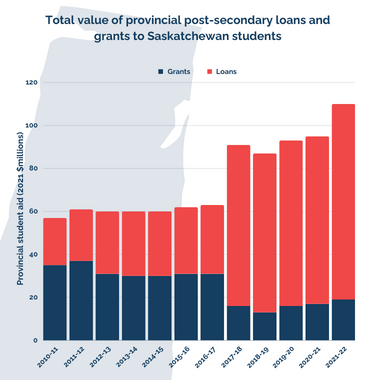
- Asia Fields and Becca Savransky examine what happens when a government chooses not to maintain its education system. And the CCPA offers up its favourite graphs of 2023 - including this depiction of how Saskatchewan students are taking on massive amounts of debt to pay higher fees in the face of slashed grant funding:

- Raymond Zheng discusses the scientific debate as to whether global warming is merely happening as projected based on the continued spewing of carbon pollution, or increasing due to unanticipated feedback effects. And Daphne Ewing-Chow points out which foods are facing the greatest risks due to the climate breakdown. 

- Finally, Leigh Stickle and Luke Mari respond to a baseless attack on housing density by pointing out that more housing and increased park space are entirely compatible when they're both designed to be inclusive rather than fenced-off. 

Friday, December 29, 2023

Musical interlude

Sofia Kourtesis - Madres


Friday Afternoon Links

 Assorted content to end your 2023.

- Shannon Hall discusses new research showing that the positive effects of COVID-19 vaccination include a reduction in long COVID in children. And Erin Prater warns about the building Pirola wave which is already causing record-high infection levels in some countries. 

- Meanwhile, Carly Weeks reports on the dire state of Canada's health care system even before that wave crests. And Larissa Kurz details the cascading failures within Saskatchewan's emergency care system, as the spillover effects from overwhelmed and under-resourced hospitals and emergency rooms has led to a lack of ambulances available for people in urgent need of care.  

- Lucy McAllister et al. examine the coverage of climate issues in English-speaking countries, with the National Post getting called out as inflicting particularly inaccurate coverage of the climate breakdown including more outright denialism than any other outlet. 

- Emily Chung reports on new data showing the industries which spew the most carbon pollution in each of Canada's provinces and territories - with fossil fuels taking the top spot in most jurisdictions due to factors including oil and gas production, coal-fired power and vehicular fuel consumption. And Shawn Fluker, Drew Yewchuk and Martin Olszynski discuss the Alberta Auditor General's conclusion that the Alberta Energy Regulator has failed to meet any outstanding recommendations to ensure that polluters pay the cost of closing down oil and gas well sites.  

- Finally, Sally Younger discusses how warming Arctic waters are resulting in yet another climate feedback loop as more melting results in increased carbon dioxide releases. And Alec Luhn reports on the climate-driven releases of iron and sulfuric acid which are turning many of Alaska's rivers most pristine rivers into a rusting orange froth. 

Thursday, December 28, 2023

Thursday Night Cat Blogging

Cat in perspective.


Thursday Morning Links

This and that for your Thursday reading.

- Jessica Wildfire offers a reminder of the breadth and depth of harm continuing to be caused by COVID-19. Julia Doubleday calls out the role of the media in normalizing perpetual reinfection, while Arijit Chakravarty and T. Ryan Gregory discuss the importance of naming things in the context of the termination of any effort to identify new variants for public awareness purposes. And Paul Withers reports on new research warning of the potential for a COVID-related heart failure pandemic, while Stephanie Soucheray discusses the revelation that brain injury markers show up in the blood even of people who are lucky enough to avoid neurological symptoms during the acute phase of COVID. 

- Chris Russell and Joel Tansey interview Akshat Rathi about his optimism based on the reality that it's now cheaper to fund a clean energy transition than to keep spewing the carbon pollution that's causing a climate breakdown. And Amanda Stephenson discusses the potential for geothermal energy to be a major part of Canada's transition. 

- But Graham Thomson offers a reminder that Danielle Smith and other petropoliticians are determined to spend obscene amounts of money on laughable promises of carbon capture and storage in order to avoid the affordable and feasible path to clean energy. And Ainslie Cruickshank reports that Fernie, B.C. is now searching for potable drinking water due to the ongoing leaching of selenium from a Teck Resources coal mine. 

- Finally, Katharina Maier, Carolyn Greene, Justin Tetrault and Marta-Marika Urbanik make the case to treat violence targeted at unhoused people as a hate crime. And Kyle Swenson reports on the right's attempts to systematically punish both people facing housing challenges and the communities who make any effort to help them. 

Friday, December 22, 2023

Thursday, December 21, 2023

Thursday Afternoon Links

This and that for your Thursday reading.

- Jackie Ruryk reports on the push by public health officials to have people take precautions against COVID-19 and seasonal illnesses only after there's already been a massive degree of uncontrolled spread. And Alanna Smith exposes how Danielle Smith's UCP is so deeply in denial as to have ordered any reference to COVID-19 or seasonal influenza to be removed from a fall public awareness campaign.  

- Matthew Rosza juxtaposes the increasing urgency of trying to avert a total climate breakdown with the U.S.' continued expansion of fossil fuel production and associated carbon pollution. Jessica McKenzie interviews Raymond Pierrehumbert about the dubious spin from the fossil energy sector which attempts to lock in long-term production (and associated spewing of greenhouse gases) with the promise of limited cuts to operational emissions. And Graham Redfearn reports on a new analysis confirming that in Australia (like elsewhere) renewables offer the prospect of a far quicker and more affordable transition to clean energy than a bet on future nuclear development. 

- David Zipper examines how vehicle bloat has pushed U.S. pedestrian fatalities to levels not seen in over four decades (among other pernicious effects on public health and safety). 

- Jim Stanford weighs in on the connection between corporate profiteering and increase food prices. And Andrew Stevens points out how unionization helps to counter corporate power and give workers a better deal in terms of both wages and working conditions. 

- Finally, Cory Doctorow takes a look at the material entering the public domain in 2024, while lamenting how cultural monopolists continue to abuse intellectual property rules and in some cases destroy works before they're ever freed. 

Wednesday, December 20, 2023

Wednesday Afternoon Links

Miscellaneous material for your mid-week reading.

- Katherine Wu discusses how the U.S. is facing a particularly grim set of winter illnesses as people have failed to get vaccinated against known threats, while Lauren Pelley reports on the low number of Canadians who got new COVID-19 vaccines this fall. Ewen Callaway writes that inhaled COVID vaccines may be able to shield against infection and spread. And Daniel Altmann and Christina Pagel point out that there's ample potential for controlled trials in treating long COVID - but seemingly little appetite to pursue them. 

- Christopher Ketcham points out that climate breakdown is just one of the problems with an economy system based on perpetually increasing extraction and waste emission. And Robert Constanza singles out the blinkered focus on economic growth as an obstacle to the pursuit of sustainable well-being. 

- Meanwhile, Shannon Osaka writes about the consistent pattern of refusal to take even the most basic steps to transition away from reliance on dirty energy. Kurt Zenz House, Josh Goldman and Charles F. Harvey highlight how direct air carbon capture schemes serve no useful purpose (except to the extent they allow denialists to pretend there's a magical solution just around the corner). And Geoffrey Diehl discusses how reliance on that type of wishcasting is one of the main problems with the work product from COP28. 

- Finally, Aishwarya Dudha reports on Jim Clifford's observation that Saskatchewan would have no problem building enough electrical infrastructure to fit with the federal government's timeline for EV adoption if it weren't governed by compulsive obstructionists. 

Tuesday, December 19, 2023

Tuesday Night Cat Blogging

Cat with company.


Tuesday Afternoon Links

This and that for your Tuesday reading.

- Ryan Meili discusses how a blinkered focus on austerian "efficiency" and exit strategies prevents the development of care systems capable of meeting long-term needs. And Dione Wearmouth reports on the fallout from the UCP's insistence on putting performative politics over even those restrictive policy goals. 

- David Climenhaga points out that Danielle Smith's reflexive Trudeau-bashing has reached the point of actively criticizing her own government's actions where they're approved of by a federal department. And Arno Kopecky offers a reminder that it's the greed of the Cons' corporate backers - not a carbon tax which is more than fully rebated for most people - that's made life ever less affordable for Canadians. But Alan Westwood, Manjulika Robertson and Samantha Chu discuss how the experts who could better inform the public about the urgency of the climate crisis and the viability of the available solutions are being muzzled. 

- Dan Zakreski reports that the Moe government's idea of investing in supportive housing is to take over and clear out a building with over a hundred tenants so it can be flipped (presumably for a friendly developer's profit).  

- A.R. Moxom discusses how fascists use denial and both-sidesing to play the victim while avoiding answering for their eliminationism. 

- Finally, Katie Baker rightly questions how a steady stream of prosecutions of previous crypto pitchmen has had little apparent effect on people's willingness to throw money at the concept. And Cory Doctorow notes that the key question in evaluating AI isn't whether it's a bubble at all, but what type of bubble it will prove to be. 

Monday, December 18, 2023

Monday Afternoon Links

Miscellaneous material to start your week.

- Geoffrey Johnston examines how the latest wave of COVID-19 is swamping Ontario's health care system while its cumulative effect is reducing life expectancies. Philip Moscovitch discusses the dangers of repeat COVID infections. And Zaki Arshad, Joshua Nazareth and Manish Pareek offer a reminder that the same vaccination, masking, and testing which have been vital to limiting the spread of COVID for the past three years remain so now even if they're being treated solely as individual choices rather than ongoing public health necessities. 

- Martin Lukacs interviews Eriel Deranger about what happened at COP28, with fossil fuel interests and their fully-owned politicians looking to block progress at every turn. And Binoy Kampmark points out that the end product is both non-binding, and ineffective even to the extent it were treated as having any effect (as also noted by the experts surveyed by Carolyn Gramling).

- Topher Sanders et al. expose the combination of bullying and bribery used by major rail companies to prevent the accurate reporting of worker injuries so they can avoid safety regulation and keep dangerous conditions in place. 

- Finally, Kenan Malik discusses how the hesitancy to challenge the class power of the wealthy has sapped politics of any meaningful effect. And while Rachel Cohen's interview with Brent Cebul rightly challenges the neoliberal view that the sole focus of policy development should be to gesture toward a given problem as cheaply and profitably as possible, it's worth noting the problem with trying to co-opt business interests by handing them even more money and power.