Saturday, October 22, 2022

Saturday Evening Links

Assorted content for your weekend reading.

- Bob Becken discusses the use of "no smell" complaints about scented candles as a sad substitute for meaningful public reporting of ongoing COVID cases. And Aastha Shetty reports on a pilot project which is just beginning to measure air quality in a few Waterloo schools two and a half years into the COVID-19 pandemic. 

- Jim Stanford writes that Loblaws' price freeze stunt has served only to show that grocery magnates have the ability to avoid price increases when they want to - but have instead been choosing to profiteer in the course of a pandemic. Arthur Delaney discusses how the U.S. Federal Reserve is choosing to suppress wages after doing nothing to stop the portion of price hikes that could be siphoned off in pure profit. And Colette Murphy writes about the price everybody ultimately pays when we allow inequality to get out of control - as well as the readily-available measures we could be using to rein it in. 

- Mohamed Bsat notes that while there's a need to build more housing, there's also plenty that can be done to protect renters who need a home within the housing stock that already exists. 

- Finally, Bill Fortier reports on newly-released court documents showing the real steps toward violent conflict taken by the #FluTruxKlan agitators at Coutts, AB. And Jonathan Montpetit and Lori Ward investigate the influx of anti-trans candidates seeking to take over school boards to facilitate discrimination against LGBTQ children. 

Friday, October 21, 2022

Musical interlude

Tove Lo - How Long


Friday Morning Links

Assorted content to end your week.

- Marc Fortier reports on the spread of the XBB COVID-19 variant which looks to be causing widespread reinfections where it's been able to get a foothold. And Josh Pringle reports on the plea from Ottawa Public Health for people to resume masking indoors (to the extent they'd stopped in the meantime). 

- Andrew Jackson discusses why Liz Truss' laughably short and chaotic tenure as the UK's prime minister would represent decisive evidence against conservative economics - at least if the philosophy of further enriching the wealthiest people and corporations was ever subject to scrutiny by politicians and media outlets which are themselves dedicated to their service. 

- Timothy Gardner reports on a new World Resources Institute study showing that the climate promises and policies made so far fall short of being sufficient to avert a catastrophic breakdown.

- Mirzokhidjon Abdurakhmonov et al. study how U.S. Senators' stock purchases lead to inflated share values - particularly where they're responsible for overseeing the industry. And Stephanie Taylor reports on the OPP's recognition (revealed through the #FluTruxKlan Emergencies Act inquiry) that Pierre Poilievre and the Cons exacerbated the siege of Ottawa by legitimizing the occupying forces. 

- Finally, Libby Giesbrecht reports on the plight of homeless people in Saskatchewan facing a severe shortage of shelter beds - even as multiple levels of government focus more on breaking up any forms of mutual aid which could possibly offer at least a partial alternative.

Thursday, October 20, 2022

Thursday Evening Links

This and that for your Thursday reading.

- Claire Sibonney talks to Colin Furness about the cell dysregulation which looks to produce many of the most dangerous effects of long COVID. Sabrina Moreno discusses the connection between COVID-19 and a rising number of maternal deaths. And Betsy Ladyzhets offers suggestions for people looking for the most useful information still available about the risks around them, while Phil Tank rightly calls out Scott Moe and the Sask Party for keeping Saskatchewan's people in the dark (and thereby facilitating another COVID wave). 

- Meanwhile, Creeden Martell reports on CanAge's research showing the Moe government also lacks any plan to either limit avoidable cases of dementia, or address its consequences for care providers. And Steven Lewis points out that the growing cost and duration of health care education creates a barrier to filling the large (and growing) number of vacancies in the health care system. 

- Lindsay Ellis reports on the U.S. Surgeon General Vivek Murthy's long-overdue recognition that toxic workplaces represent a needless danger to physical and mental health. 

- Finally, Kat Exner reports on a study from the Daily Bread Food Bank showing that most food bank users face deep poverty alongside their lack of food security and other risk factors. 

Wednesday, October 19, 2022

Wednesday Afternoon Links

Miscellaneous material for your mid-week reading.

- Andre Picard discusses how Canada is unprepared (by choice) for the effects of long COVID, while Jennifer Lee reports on warnings from Alberta doctors that people need to take the dangers far more seriously than their political leaders are bothering to do. Matthew Braunginn writes that the ripple effects of long COVID have broad economic and social implications. And Tanya Lewis notes that the combination of the COVID-19 pandemic and the drug poisoning crisis has set the U.S. back by decades in terms of individual life expectancy. 

- The Canadian Labour Congress has released a report from Jim Stanford on the need to stop a pattern of interest rate increases which is doing far more to harm workers than to avoid inflation. And Hadas Their discusses Jamaal Bowman's work to address inflation through price controls which target the corporates which have used it as an excuse to extract record profits. 

- Meanwhile, Umair Haque warns that the precarious state of personal finances creates a substantial risk of systemic failure. 

- Tom Randall discusses the clean energy adoption curves which see widespread shifts toward renewable power, electric vehicles and battery storage on a scale which is likely to lead to a permanent transition.

- Finally, Justin Ling exposes a few more of Danielle Smith's more alarming public pronouncements and thought patterns - even as UCP MLAs, including the leadership contestants who previously identified at least some concerns, line up meekly behind her. 

On democratic decisions

Today looks to be a watershed moment for the future of the B.C. NDP, as its provincial council determines whether to follow a recommendation to disqualify Anjali Appadurai from its leadership race - and in the process effective disenfranchise the entire membership in favour of a coronation. 

But it's worth noting that the issue isn't an entirely new one. And the recommendation in the B.C. campaign seems to be applying drastically different standards and results than what Saskatchewan experienced in relatively recent memory. 

By way of background, in the 2009 Saskatchewan NDP leadership campaign, a volunteer on behalf of Dwain Lingenfelter's campaign submitted and paid for 1100 membership applications in the names of members of two Saskatchewan First Nations without their knowledge or consent. (The volunteer would end up pleading guilty to the criminal charge of attempting to utter forged documents.) 

Lingenfelter's campaign manager had approved of payment for the memberships - without knowing they were being submitted without the putative members' knowledge, but also without following up to determine whether there was any financial need to justify the mass payment of membership fees. And when the mass signups without consent were discovered, both the campaign and the party had to determine how to respond. 

For Lingenfelter's part, he treated the matter as being one of an "overexuberant volunteer", while not imposing public consequences on the campaign manager or anybody else. 

The Saskatchewan NDP's response was to cancel the memberships that had been falsely submitted, and to commission an investigative report into how the problem arose and how to prevent it from happening again. And while there were some calls for Lingenfelter to withdraw from the race voluntarily, I don't recall any serious possibility that he would be disqualified, either for the initial violation or for his reaction. (Indeed, my view at the time was that it was best for him to remain in the race and let members decide how his handling of the issue weighed in evaluating his suitability as a leader.) 

Comparing that situation to the one now facing the B.C. NDP, there looks to be little reason why a more severe penalty would result in Appadurai's case. Any issue about the validity of new memberships would result solely from potential regulatory non-compliance in reaching people who wanted to become members, not outright forgery to bring people in unwittingly. The investigation was able to contact questioned members at a level of detail which allowed for the flagging of specific memberships based on existing membership in another party (if one presumes that should itself result in cancellation). And there isn't an obvious difference in Appadurai's response as compared to Lingenfelter's: both acknowledged some wrongdoing, while minimizing how it would be characterized and declining to punish members of their own campaign for less-than-perfect oversight. 

That leaves a strong perception that the difference in treatment arises largely from the question of deviation from expectations. Lingenfelter was the heavy favourite entering the campaign, meaning that his disqualification might have been seen as producing an unexpected result. And conversely, Appadurai's campaign is under particular scrutiny due to the perception that she might well have signed up enough members to change the previously-anticipated outcome. 

Hopefully it goes without saying that campaign rules shouldn't be made and applied with the goal of channeling the results toward predetermined outcomes. And if the B.C. NDP decides it would rather deny members any vote than find a mechanism to cancel only questionable memberships, that figures to have far-reaching effects within the party and beyond as to whether people see democratic change as a meaningful possibility. 

Tuesday, October 18, 2022

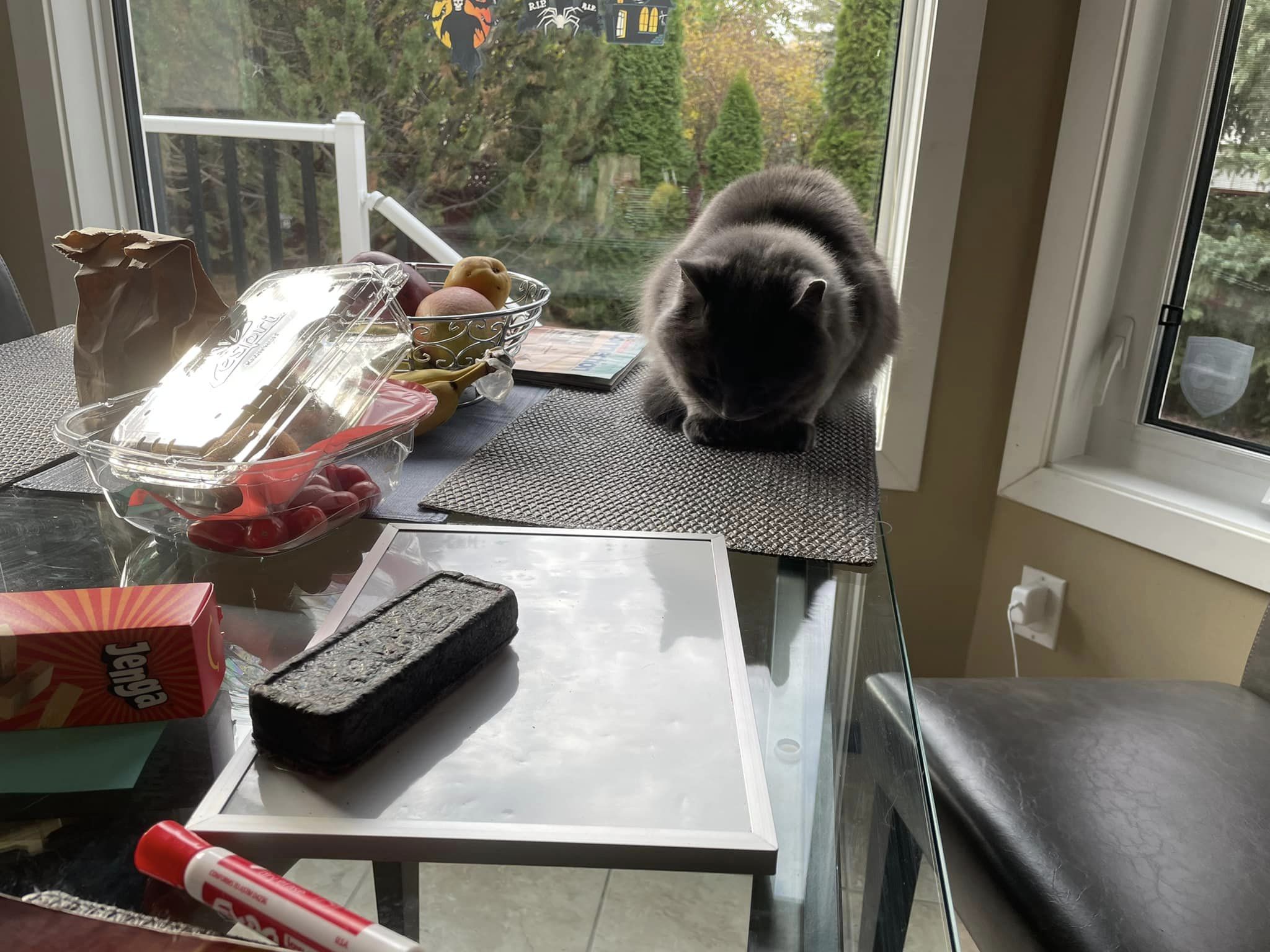
Tuesday Night Cat Blogging

Casual cats.


Tuesday Afternoon Links

This and that for your Tuesday reading.

- Mike Crawley reports on new research showing both the growing number of Canadians suffering from long COVID, and its tendency to result in greater strain on our health care system. And Crawford Kilian writes about the dangers of voting against public health - particularly in the midst of an ongoing pandemic. 

- Ricardo Tranjan discusses the connection between predatory lending and housing insecurity, as people forced into short-term, high-interest loans are increasingly unable to find homes in the fact of soaring rental costs. And Heather Vogell exposes the secretive rent algorithm which is being used to extract every possible dollar from tenants. 

- Dan Cameron examines some of the options available to enhance the voices of workers in shaping their own workplaces. 

- David Climenhaga offers a reminder that the Flu Trux Klan's support was never widespread - even in Alberta where its warped worldview is now reflected by the newly-installed premier. And Charles Breton, Olivier Jacques and Andrew Parking examine the differing levels of resentment between Canadian provinces - with Saskatchewan ranking atop the set of petroprovinces as the most resentful of both Canada as a whole and its other regions. 

- Finally, Mitchell Thompson investigates some of the systematic efforts by racist and anti-LGBTQ forces to take over Canadians school boards to indoctrinate students with their own hate. 

Sunday, October 16, 2022

Sunday Afternoon Links

This and that for your Sunday reading.

- Melissa Lopez-Martinez reports on the belated effort to get Canadians to resume taking precautions against the spread of COVID-19. And the Guardian is telling the stories of people living with long COVID - and what they've lost to a pandemic whose damage could largely have been averted by remotely responsible public policy.

- Jared Wesley offers an important look at Danielle Smith's populist playbook which seeks to simultaneously portray privileged people as victims and as an unstoppable force whose will must be given effect. Brett Dolter and Russell Wangersky both point out how Scott Moe reflexively deceives the public about empirical reality to serve the continued inflation of his own ego. And Mary Elizabeth Williams discusses the connection between conservative politics and lower levels of empathy - though perhaps the most important point to be drawn from recent empathy research is how the right is winning the war to eliminate it in people of all political persuasions.

- Chandler Dandridge interviews Gabor Mate and Daniel Mate about how a capitalist society is harming everybody's mental health and well-being. Kim Siever points out how corporate profits have consistently outpaced any gains in wages for Canadian workers. And Katie Underwood interviews Lana Payne about her efforts to ensure members of the working class are valued by governments and employers alike.

- Finally, Brett Marsh comments on how the effects of a climate breakdown will fall disproportionately on the people least able to bear them. And Andrew Nikiforuk discusses the mounting cost - and lack of benefit - being inflicted on the Canadian public due to the Libs' decision to build the Trans Mountain pipeline at public expense.

Saturday, October 15, 2022

Saturday Afternoon Links

Assorted content for your weekend reading.

- Umair Irfan discusses the importance of getting COVID-19 booster shots - particularly the bivalent versions better targeted toward newer strains - in order to help limit the damage from a pandemic which is otherwise being allowed to wreak havoc with little restraint. And Keeanga Yahmatta-Taylor points out how parents and teachers bear the brunt of politically-oriented refusals to allow schools to close where necessary to protect public health.

- Simon Enoch discusses how the oil industry's propaganda and rage farming birthed the Flu Trux Klan. And Christopher Bonasia notes that while the fertilizer lobby is trying to disavow its connections to the convoy which laid siege to Ottawa, it's still planting its messaging firmly in the realm of denialist disinformation.

- Justin Ling examines some of Danielle Smith's more appalling public positions which were either overlooked or accepted as she ascended to power in Alberta. And Tyler Kingkade, Ben Goggin, Ben Collins and Brandy Zadrozny report on the roots of the Republicans' talking point about litter boxes in classrooms - though it's especially telling that to the extent there's even a hint of reality to the claim, it flows directly from the Republicans' own fanaticism in pushing a gun culture where the prevalence of school shootings requires classrooms to be provisioned for what should be unthinkable. 

- Finally, Sisonke Mismanga discusses how the combination of tax giveaways to the rich and shrinking opportunities for the working class is exacerbating Australia's class divide. And Katie Verigin points out how Canadian consumers stand to be further squeezed by a settlement which will allow businesses to charge fees for credit card use (without any expectation that they'll lower base prices accordingly).

Friday, October 14, 2022

Musical interlude

Dayseeker - Without Me


Friday Afternoon Links

 Assorted content to end your week.

- Alvin Chang charts some of the grim realities of long COVID which is being allowed to disable people with little to no restraint. And Frances Stead Sellers discusses how COVID-19 can undo a decade of work toward individual health and fitness. 

- The Energy Mix points out that Alberta's oil war room has revealed that the oil sands are increasing their carbon emissions even on a per-barrel basis. Kevin Crowley writes that Exxon is finally running out of people willing to dedicate their lives to polluting the planet for profit. And Brett March notes that the poor stand to suffer the most - and inequality stands to be exacerbated - as our climate breaks down. 

- Meanwhile, Emily Atkin explores how the pushback against ESG (environmental, social and governance) principles can be traced entirely to corporate puppets and the climate denial movement. 

- Jonathan Vigliotti reports that the ecological toll we've taken on the Earth includes the disappearance of a billion snow crabs (and the resulting cancellation of a fishing season). And Umair Haque discusses the developing age of extinction which we're blithely allowing to overtake us.

- Finally, Carlton Reid reports on new research showing that changes from car trips to bicycle or train can make an outsized difference in reducing emissions. 

Thursday, October 13, 2022

Thursday Afternoon Links

This and that for your Thursday reading.

- WHO Director General Tedros Adhanom Ghebreyesus examines how long COVID is producing disastrous social and economic effects. Helena Perez Valle interviews Deepti Gurdasani about the lessons we should be learning both to address the continued spread of COVID-19 and to prepare for future pandemics, while David Wallace-Wells discusses the need for more compelling stories about the continued toll of COVID in order to make the case for the public health measures needed to keep people safe. And Nergis Fertina explores how COVID itself may be changing people's personalities to be more aggressive and less engaged. 

- Glorie Dickie reports on new research showing that the Earth's wildlife population has dropped by more than two-thirds in just the last half century. Emily Hofstaeder reports on the grossly one-sided relationship between pharmaceutical manufacturers which have been devastating Puerto Rico's environment by dumping pollutants and using limited water resources, and the public which has subsidized that harm. And Camilla Hodgson discusses how "loss and damage" funding for developing countries looms as the next major issue in global climate talks. 

- Meanwhile, the Alberta Federation of Labour has offered a blueprint (PDF) for economic development which accounts for the need to transition to the economy of the future - rather than continuing to operate in denial as the UCP and Saskatchewan Party are both determined to do. 

- Josh O'Kane reports on a new study showing how Microsoft has evaded even more taxes than previously known by shifting profits between jurisdictions. 

- Finally, Mitchell Thompson highlights how inflation is being used as an excuse to suppress real wages in Canada while big business goes unquestioned about its increased profit share. Robert Reich discusses the need for a bottom-up economy rather than the trickle-down model which benefits only those at the top. And Juliana Kaplan and Madison Hoff report on new research showing that union membership can boost a worker's lifetime income by over a million dollars - offering as much of a boost to earnings as a college degree.

Wednesday, October 12, 2022

Wednesday Morning Links

Miscellaneous material for your mid-week reading.

- David Axe reports on the spread of a new COVID-19 subvariant which pairs increased transmissibility with resistance to antibody therapies. And Andrew Gregory reports on the World Health Organization's pleas for some recognition of the damage being done by long COVID, while Benjamin Mazer writes about the particular dangers of the post-infection phase in causing long-term damage.  

- Darren Major reports that the disaster relief fund intended to respond to climate change-fuelled disasters until 2031 has run out of money to deal with even the damage done to date.

- Damian Carrington reports on new research showing that the spread of toxic microplastics extends into humans' breast milk.

- Leyland Cecco reports on the AusterityTO public art which is bringing attention to the costs of municipal neglect - even as the establishment looks to lock it in for yet another term. Jennifer Pagliaro points out the gross underinvestment in community supports as money is instead funneled into an already-inflated police budget. And Alec Salloum reports on the continued lack of resources for unhoused people in Regina, as Sandra Masters focuses the city's immediate attention on dismantling any help they might obtain through mutual aid while putting off even a preliminary discussion of funding until the dead of winter. 

- Finally, Katie Hyslop is able to offer a look at the socially conservative school board candidates being advance in order to make bigotry a central element of public education.

Tuesday, October 11, 2022

Monday, October 10, 2022

Monday Afternoon Links

Miscellaneous material for your Monday reading.

- Robert Reich rightly questions why trickle-down economics are still being pushed even after decades of consistent failure to accomplish any goal other than increased inequality. And James Galbraith and Mariana Mazzucato each offer an outline as to how to reshape economies to achieve social goals other than further engorging the obscenely-wealthy.

- Carina Marquez et al. study how the length of actual COVID infection has changed over the course of the pandemic, finding an increased length of infection in the Omicron phase even as isolation and leave policies have been weakened. And Kenyon Wallace and Andrew Bailey warn that Ontario is seeking another rise in the number of cases in long-term care homes just in time for increased indoor activity to drive even more transmission.

- Greta Thunberg highlights the need not to accept the word of governments and corporations claiming to be doing their part to avert a climate breakdown while in fact exacerbating the problem. Alastair Marsh reports on new research showing the need for a drastic transition in investment from dirty fossil fuels to clean energy in order to meet existing commitments. And Nina Lakhani reports on TC's cynical use of Black community leaders to create the pretense of community support for pipelines which in fact stand to impose environmental costs on people who can't afford to bear them.

- Oliver Moore discusses how many municipalities have learned valuable lessons about the merits of keeping space open for walking and pedestrian use rather than parking - while Regina stands out as one of the few Canadians cities actively going in the opposite direction.

- Isaac Chotiner examines the longstanding racism and neglect behind Alabama's widespread prison strike.

- Finally, Brodie Thomas reports on the organized ignorance which is on the verge of completely taking over the UCP's party structures. And Cara McKenna reports on the large amounts of money being dumped into municipal campaigns in Squamish, B.C. by the natural gas industry and its puppets to try to bulldoze over popular disapproval for gas projects.

Sunday, October 09, 2022

Sunday Morning Links

This and that for your Sunday reading.

- Dhruv Khullar writes about the likelihood that a continued lack of public health measures will push the vast majority of people toward multiple COVID-19 reinfections, including ones which may not show up on less-sensitive tests. And Carolyn Barber discusses how decision-making around the continued pandemic is being dumped on individuals who largely aren't aware of the long-term risks of constant exposure. 

- Trevor Dunn tells the story of Lynn Spiegel and other seniors who are facing homelessness due to a broken housing system which is oriented toward capturing profits rather than providing for people's basic needs and rights.

- Tim Di Muzio and Matt Dow write about the need for a fundamental change in our energy system in order to extricate ourselves from both the environmental toll of a climate breakdown and the social harm resulting from our fuel supply being under the control of a cartel of bad actors.

- Finally, Graham Thomson wonders whether Danielle Smith's constant pandering to the alt-right will change at all now that she's set to take power - though the early indications look anything but promising. And Frank Graves and  Jeff Smith examine the spread of authoritarian populism in Canada.

Saturday, October 08, 2022

Saturday Morning Links

Assorted content for your weekend reading.

- David Moscrop hikes how Canada's financial elite is engineering a recession to ensure that workers don't see wage increases to match the price hikes caused by corporate profiteering. And Gaby Hinshiff writes about the UK Cons' plan to blame everybody but themselves (and their disastrous combination of nationalism and trickle-down economics) for what looks to be a particularly desperate winter for the UK's working class.

- The Canadian Press reports on the connection between the ongoing climate breakdown and the extreme weather seen in the course of Hurricane Fiona. And the Morning Star reports on the massive number of lives at stake if we don't work on limiting emissions and transitioning to a clean economy immediately.

- Meanwhile, Steven Donziger discusses the threat to U.S. democracy posed by a an impending case which could see the whims of gerrymandered Republican state legislatures take precedence over any effect of votes cast by the electorate.

- Finally, Pat Van Horne offers a reminder that the development of the universal health care system which we now value so strongly was the result of a determined focus by Tommy Douglas and the CCF - not a philosophy of taking only incremental gains toward no particular end.

Friday, October 07, 2022

Musical interlude

The Knocks feat. X Ambassadors - Comfortable


Friday Afternoon Links

Assorted content to end your week.

- Nicola Davis, Pamela Duncan and Carmen Aguilar Garcia report that the toll of long COVID in the UK has surpassed a million people. And Jane Dalton reports on the UK's massive increase in COVID-19 hospitalizations - which in past waves had tended to precede similar jumps in Canada. 

- Eric Levitz interviews Adam Tooze about the damage the U.S. Federal Reserve's obsession with suppressing wages figures to inflict on the global economy. And Paul Krugman likewise warns of impending self-inflicted economic damage. 

- Meanwhile, Robinson Meyer discusses the transformative potential of the U.S.' newly-passed climate legislation if it isn't completely counteracted by measures to prevent economic growth. Alex Ballingall reports on the push by Canadian oilsands workers for a transition to work that isn't tied to a dying industry, while Natasha Bulowski reports that the Libs have instead committed to an ever-escalating price tag for the Trans Mountain pipeline. And Aime Williams reports on the IMF's recognition that the costs of a total climate breakdown far exceed the investment needed to avert it to the extent possible. 

- Elizabeth Thompson reports on the growing amount of unpaid taxes identified from the Panama Papers and Paradise Papers - while noting that the Canada Revenue Agency can't say whether it's started a single audit to being recouping money that's been hidden offshore. 

- Finally, Tom Cardoso and Robyn Doolittle report on Information Commissioner Caroline Maynard's warning that the reflexive tendency to suppress and redact information has left Canada's access-to-information system falling far short of its legislated requirements while also costing far more than it should.